There is a quiet shift happening in the UK cleaning franchise market, and it is less about mops and more about mindset. For Merry Maids UK, the story is one of steady demand, yes, but more importantly, predictable demand.
“I have seen steady growth across the UK, says Vikki Donnachie, Brand Leader for Merry Maids UK. “Home cleaning has moved from being a luxury to a practical part of how households manage their time. People are busier, and outsourcing regular cleaning is now a normal choice for busy families, professionals and older adults who want to stay independent at home.”
That normalization of outsourced cleaning is doing more than filling diaries. It is creating a dependable, repeat-customer model that franchise owners can build around. The shift from occasional to regular service is subtle, but commercially significant.
“From a business perspective that creates stability,” says Donnachie. “Every Merry Maids territory covers at least 150,000 households, so our franchise owners are operating in areas with real scale and long-term potential. Our partnership with the Alzheimer’s Society and our certified dementia training for the whole cleaning workforce also means we meet real needs in the community, which matters to customers and to owners alike.”
What has been created is a business model rooted in recurring revenue and community relevance, rather than one-off transactions, and it sits at the heart of the brand’s positioning.
A management-led model, not a mop in hand
In a crowded domestic cleaning franchise market, differentiation is often framed around flexibility. Merry Maids leans into structure and scalability.
“A lot of domestic cleaning franchises focus on lifestyle and flexibility. We take a different approach. Merry Maids is designed for people who want to run a management-led business they can scale, rather than doing the cleaning themselves.”
It is a clear distinction, that means it is not about buying yourself a job, but building something that can grow beyond the owner’s own labor.
“What sets us apart is structure and experience. You work in a defined territory and follow proven systems for recruitment, training, pricing, scheduling and quality control. That gives you a predictable foundation to grow from. On top of that, our technology is purpose built for domestic cleaning, so owners get visibility and control from day one. Put those things together and you have a model designed for long term value.
From operator to leader
That shift in emphasis fundamentally changes the role of the franchise owner. The traditional image of the owner-operator is replaced by something closer to a team leader with a growth agenda.
“It changes the role completely. Instead of doing the cleaning yourself, you lead a team, manage performance and build recurring revenue. The day to day is about organising people, maintaining standards and growing the customer base.”
The early days are, unsurprisingly, hands-on in a different way.
“The first year is about getting the foundations right. After that your role becomes more strategic as the business scales. If you enjoy developing people and building a business, you will find this model far more rewarding than being an owner operator.”
What is being sold is not just a franchise, but a progression – from doing to directing, from task to strategy.
Who fits the model?
That progression opens the door to a broader range of potential franchisees, particularly those without sector-specific experience.
“You do not need a background in cleaning. The people who thrive with us want structure, clarity and the ability to scale. What matters is your ability to lead people, follow a proven system and focus on building recurring revenue.”
The emphasis returns, again, to systems and leadership rather than technical skill.
“Because the model is management led, we provide the training and operational support so you are not expected to bring technical cleaning knowledge. If you like running a team, enjoy clear processes and want to build something long term, this is a great fit.”
It is a reframing of what the right “fit” looks like in a cleaning franchise, which is less about experience, and more about mindset.
From startup to scale
Of course, mindset only takes you so far. The early-stage challenge for any new franchisee is turning the theory into traction.
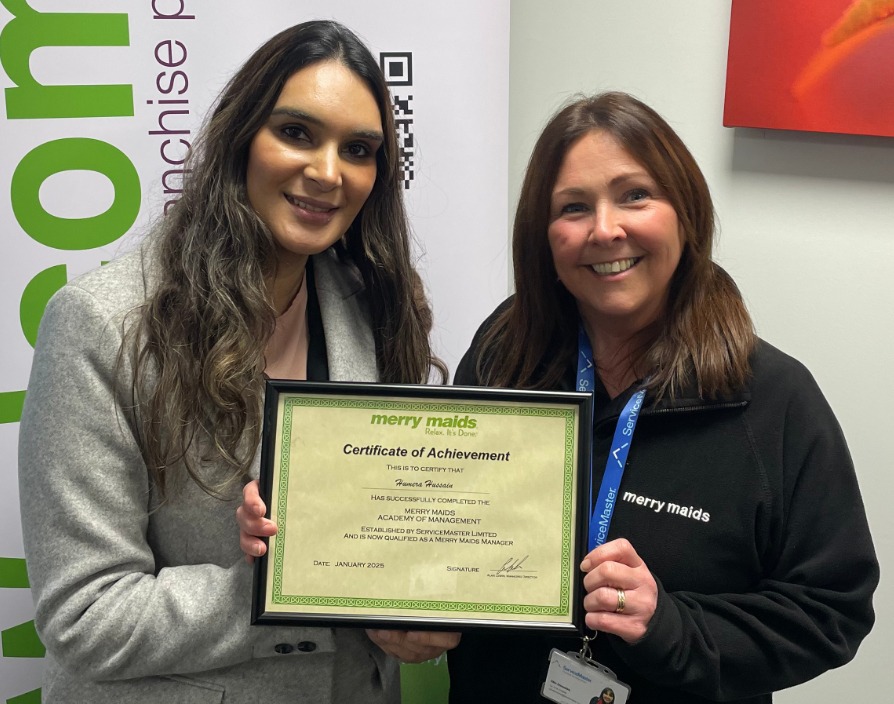
“We know starting a business can feel daunting, which is why our support is front loaded and ongoing. Every new owner begins with our two-week Training Academy covering cleaning techniques, health and safety and business operations. That gives you the confidence to launch properly.
“You then follow a structured 12-week launch plan to build your first customer base. After launch we continue with operational guidance, technical training and network support. The aim is to move you from start-up to scale in a clear, supported way.”
The aim is to reduce uncertainty, provide a roadmap, and let the model do the heavy lifting.
Systems as the engine of growth
If recurring revenue is the aim, systems are the mechanism that makes it possible.
“For me, systems are what turn a cleaning service into a scalable business,” says Donnachie. “Choosing the right franchise is a big decision, and most people looking at this sector want reassurance that the brand is established, the systems are proven and the support is there when they need it. That is exactly what Merry Maids offers.
“The structure also supports growth. Merry Maids is designed to build recurring revenue through regular domestic cleaning services. Your role is to lead your team, develop your customer base and grow within a defined territory. Because the systems are already in place, you can focus on scaling rather than constantly reinventing how the business works.”
And, crucially, those systems are not just about revenue but all the other positive attributes of being a business owner.
“That is where lifestyle benefits come in. When a business runs on strong processes, it becomes less dependent on the owner. You gain more control, more predictability and, over time, more freedom. It is a business built for stability, repeat demand and long-term value.”
Technology and visibility
Underpinning those systems is a layer of technology designed to keep everything connected and visible.
“Technology is central to how our owners run and scale. Our tools reduce admin, improve consistency and give owners the information they need to act quickly.”
They include:
- Business Management Software (BMS): “Everything from customers to teams to invoicing sits in one place, giving you full control of your operation.”
- 24/7 E-commerce booking website: “Customers can check availability, get instant pricing, and book online — and those bookings feed straight into your system.”
- Mobile job-management app: “This keeps your team organised, helps you track progress in real time, and reduces admin.”
The benefit is cumulative rather than isolated.
Together, the tools make the business easier to run, easier to monitor and easier to scale, adding the visibility and control needed to focus on growth rather than day to day firefighting.
That visibility also aids data-based decision-making.
“The platforms give you joined up insight. When data from bookings, operations and field delivery is connected you can spot trends and act early. For example, you can identify which days are most profitable, which teams need support, or which services are growing in demand.”
In a sector often driven by instinct, that shift toward data-led decisions is notable.
“That visibility turns guesswork into decisions. You can allocate resources, adjust pricing or target marketing with confidence because you are responding to real patterns, not hunches. In short, the tech gives you the evidence you need to run and grow the business sensibly.”
Early challenges and structured support
Even with systems and technology in place, the early days can feel like a balancing act, overwhelming even.
“There is a lot to learn, a lot to organise and a natural pressure to make the right decisions. The biggest challenge for most new franchise owners is knowing where to focus their time and how to build momentum without feeling pulled in every direction.
“This is where the structure of the Merry Maids model really makes a difference. You are not starting with a blank page. You follow a clear launch plan that breaks the first twelve weeks into manageable steps, so you always know what to prioritise and why it matters. It removes a lot of the uncertainty that comes with starting a business on your own.”
Building confidence is another important part of the equation. Particularly in the early stages of the business.
“Many people joining us have never run a cleaning business before, and that can feel daunting. Our two-week Training Academy gives you the grounding you need, and the ongoing support from our team means you always have someone to turn to as questions come up.”
A market still growing
Looking ahead, the opportunity appears far from saturated and, indeed, demand is growing and accelerating.
“Busy families, professionals and people needing support at home are all potential customers,” adds Donnachie. “There is room to scale in existing territories, new territories are opening and we have some new services in development.”
For prospective franchisees, the Merry Maids pitch is that if you want to build a structured, long-term business, rather than a small-scale cleaning job, now is a great time to get involved.
“Bring energy, a willingness to lead and a focus on building recurring customers, and you will find plenty of opportunity.”