Nigel Toplis, chairman of The Bardon Group, explains why connection is the defining advantage of the franchise model.
Franchising is a classic example of where the sum of the parts, the independent business owners, achieve greater success by connecting to a wider community of similar individuals.
Indeed, more than any other business system, franchising truly encourages and rewards the sharing and adopting of best business practice, be it from franchisors to franchisees and vice versa, and from franchisees to franchisees.
Franchising: why, what, how?
It is often said that franchising is the fastest growing and most consistently successful way to deliver products and services to market. In fact, it’s a crazy mixture of conformity and individuality that combines the best elements of both big business and of small operations.
But, rather than waking up in the middle of the night and shouting ‘Eureka! I must become a franchisee’, people invariably conclude they want to run their own business for a whole host of different reasons.
Taking control of your own destiny
In my experience taking control of your own destiny by becoming your own boss is the most prevalent reason, maybe brought on by corporate frustration or simply a desire to be directly rewarded for the effort you are willing to put in.
Others may look upon franchising as an ideal way to build a valuable capital asset, which can later be sold or transferred, whilst some may have a desire to learn new skills. I have even known franchisees who wanted to establish a business to provide employment for family members.
Successful franchisees come from all walks of life
Over the years and across the breadth of brands I’ve been involved with, individual’s previous experience ranges from cattle ranching in Patagonia, a greengrocer in Chiswick, flight attendant for British Airways, plus those employed in design, operations, HR and sales, and many other backgrounds.
However, the one common thread through most franchisees is that very few of them will have had the experience of working for themselves previously: the vast majority come from a corporate, service, military or educational background.
What they further have in common, however, is a desire to succeed, a willingness and propensity to work hard and an understanding that they have a greater chance of success if the franchise model and systems are followed to the letter.
In business for yourself, not by yourself
Running your own independent business can be lonely and expensive. If you set up your own business, you are responsible for everything.
Being a franchisee brings all the benefits of owning your own business supported by a raft of head-office services, with access to, and usage of, the brand, logo and trademarks. But more than these, the franchisor provides experience and know-how and is on hand to demonstrate the proven operational methods, as part of the franchisee’s training process. The franchisor will also supply marketing tools, sales training and technical guidance, and will assist in the areas of procurement and financial planning.
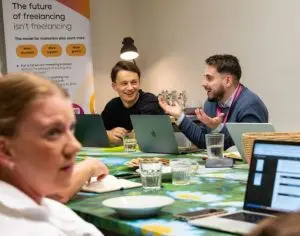
Furthermore, once you have set up your franchised business you will be able to network with other franchisees to share best practice and advice. And, by being part of a community, you will be able to enjoy economies of scale when it comes to buying services and supplies for the business, as well as benefitting from the research, development and business updates carried out for the brand by head office.
There is no ‘carte blanche’ in a franchise
If you set up your own independent business then frankly you can do whatever you want. But, if you sign up as a franchisee then there are responsibilities, including signing a binding franchise agreement and meeting the expectations of the franchisor.
As a franchisor, we expect our franchisees to be honest in all dealings including the payment of ongoing fees, to make the most out of the systems and support available and to work hard to build high levels of repeat business.
So, there’s no point in becoming a franchisee if you are the type of person who likes to do their own thing and not be part of a bigger network. Mavericks do not make good franchisees.
Finally, I would say this: franchising is not for everyone, but there is an overwhelming case to be made in its favour, none more so than that it allows you to be in business for yourself, but not by yourself.