But there’s another aspect of franchising that offers a huge advantage in business – and one that is arguably more relevant in these times of economic and social change: the ability to adapt to changing markets and remain competitive.
Looking forward – to what the future holds for a particular industry – is every bit as important as looking back over what has worked effectively until now.
One industry this applies to at the moment is social care – a sector where franchising allows people without previous professional experience to enter a highly regulated industry with confidence.
But the social care environment is changing. Chronic underfunding by successive governments has become a political hot potato, having once again been pushed back beyond the next general election. It is increasingly acknowledged that ‘rescuing’ the NHS will require the social care sector to step up and help ease the pressures currently faced by acute frontline health services.
Our elderly population continues to grow, while the number of people working in care falls short of required levels. Care providers, like all SMEs, find their margins squeezed by upcoming increases to the National Minimum Wage and Employers’ Contribution to National Insurance.
But new business opportunities also beckon:
Savvy care brands are developing technology partnerships, using AI to drive workforce efficiencies and thereby enabling staff to spend more time in direct contact with more service users.
They are using increasingly sophisticated means of data monitoring within the home setting to help Clients maintain their health and independence in a safe environment for longer.
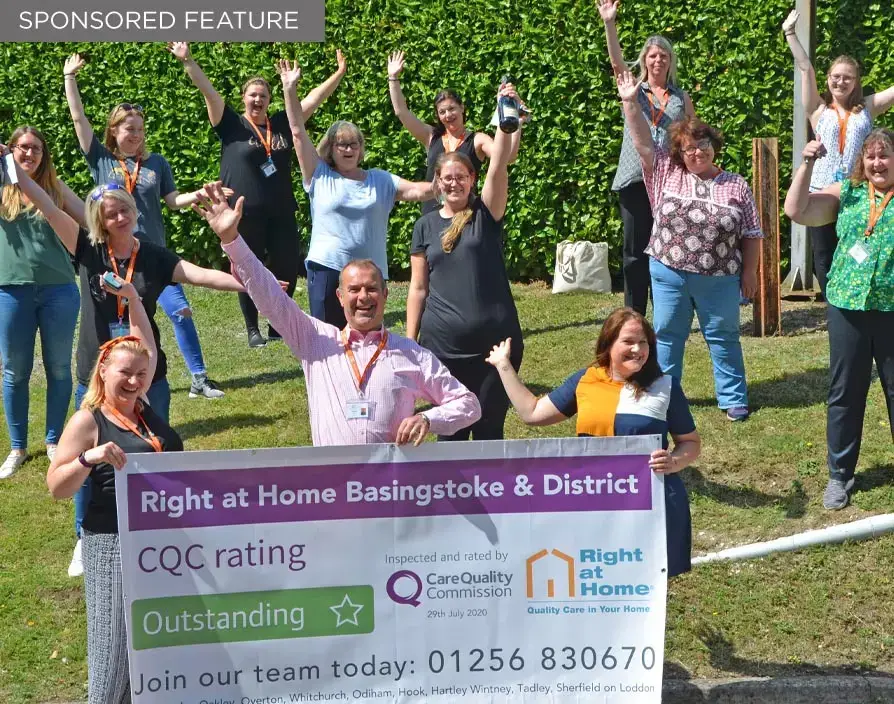
Right at Home is a care franchise at the premium quality end of the market, offering a model that has always promoted a preventative agenda to support its Clients’ long-term healthcare. As such, they are a brand that innovators in this space want to talk to.
Recognising that future-proofing their business model will give their Franchisees security, Right at Home has invested more than £2m in developing bespoke operating software, ensuring control over future tech integrations, and recruiting a clinical lead to upskill CareGivers in delegated task activities that would otherwise require nursing services.
This gives Franchisees the ability to deliver in-home clinical care services that would otherwise require Clients to go into another care setting — or onto associated waiting lists.
The impact for Franchisees has been immediate, as they can retain increasingly complex care packages and accept referrals that would previously have been beyond their scope of care.
Around 2,500 CareGivers have so far been trained in urinary catheter care, bowel stoma care and gastrostomy/PEG care – with a further 21 offices also trained in seizure management, simple wound care and diabetes.
Right at Home CEO Lucy Campbell says: “Our investment in software and training paves the way for significant developments in our business model. Already we have offices piloting technology such as voice-activated, AI-assisted support, and monitoring Clients’ vital signs as would happen in hospital settings.
“This aligns with the Government’s future vision for developing ‘hospital at home’ healthcare provision and investing in ‘virtual ward’ technologies. It’s an exciting time and we will ensure Right at Home Franchisees are well positioned to extend new opportunities to their Client base.”
This article is brought to you by Kate Dilworth, Head of Development for Right at Home UK.