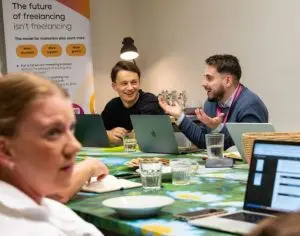
Hosted by the energetic and ever-engaging Jodie Marsh, Commercial Director at Elite Franchise, the session brought together an impressive panel spanning the franchising ecosystem: franchisors, franchisees, legal experts and industry leaders.
Franchising is full of potential for Gen Z, but the industry has work to do to make it accessible, relatable and understood.
Most Gen Z don’t know what franchising is
Jodie kicked off with an anecdote that instantly set the tone: her own 24-year-old son, when asked to define franchising, responded with a tentative “Like McDonald’s?” This resonated with many on the call, even those now thriving in franchise businesses confessed they stumbled into the model almost by accident.
Brandon Ackerman of ChipsAway and Emma Bentley of Stagecoach Performing Arts both recalled entering franchising with little-to-no formal exposure to it. “I found out about franchising from my hairdresser,” Emma admitted, to collective smiles from the panel. Brandon, on the other hand, discovered it on his own after university, drawn to the balance of independence and the structure that franchising offers.
A missed opportunity in education
Repeatedly, panellists returned to the same issue: franchising isn’t included in mainstream business education. Fiona Boswell, Head of Franchising at Knights, highlighted how absent the topic is from business curricula, from A-levels to MBAs. Pip Wilkins, CEO of the British Franchise Association (BFA), dropped the statistic that fewer than 7% of franchisees in the UK are under 30, and that figure hasn’t changed in over a decade!
The consensus? We’re failing to show young people that franchising is a viable and often preferable alternative to the typical post-university pathways. “We need to be showing up in schools, colleges, football academies, anywhere young people are planning their futures,” said Liam Hobbs, Managing Director of More Than Loft Ladders and sponsor of the event.
Rebranding franchising for the next gen
It became increasingly clear that to engage Gen Z, the sector needs a rebrand. Pip said it best: “We talk about ethics, legalities, and operating standards, that doesn’t resonate with 22-year-olds.”
The panel brainstormed snappier, more compelling ways to talk about the model:
- “Build your hustle with squad support.”
- “Own it. Grow it. Your way.”
- “Be your own boss… with backup.”
The message? Same model, modern language.
The power of passion and purpose
What was truly inspiring was how passionate Emma and Brandon were about their work. Emma used her house deposit to buy her franchise at 26. A bold move, but one she doesn’t regret. “I got on the business ladder instead of the property ladder,” she said. “And that ladder has no ceiling.”
Brandon, who launched his franchise at 21, reflected on the sacrifices: “It’s the hardest thing I’ve ever done, but now I see the freedom coming.” Their stories highlight one vital point: franchising isn’t a shortcut! It is a proven model for building something meaningful.
Franchisors must step up
Liam was refreshingly honest about his own journey. After an early failed business attempt in his 20s, he found security and structure in franchising. Now a franchisor himself, he’s determined to support young entrepreneurs, offering discovery days, hands-on training and even staggered start-up payments to make entry more accessible.
Fiona added a critical point about due diligence: legal agreements should clearly outline the support, training, and long-term value a franchisee receives. “Franchising is not pyramid selling,” she said. “It’s business in a box, with ongoing support.”
Mentorship, coaching and growth support
A standout moment came during the Q&A, when an audience member asked Emma and Brandon what growth support they get from their franchisors. Both spoke warmly of mentoring schemes, business consultants, and peer introductions within their networks. The support is real, but franchisors must also be prepared to walk the talk when it comes to nurturing younger franchisees.
The elephant in the Zoom room
Unsurprisingly, funding remains a barrier. The cost of entry can be daunting for a generation already burdened by student loans and high living costs. But the panel shared some practical advice:
- Government Start-Up Loans are widely used and often pre-approved by franchise brands.
- Some franchisors are exploring joint venture models and staggered buy-ins.
- Banks are becoming more receptive to solid franchise business plans, but preparation is key.
As Brandon put it: “You’ve got to be willing to work harder than the guy next to you. But if you do, the rewards will come.”
What needs to change
If there was a single takeaway from Next Gen Z, it’s this: the franchising industry is packed with opportunity, but unless we actively engage and adapt for the younger generation, they’ll miss it. Or worse, we’ll lose them to other sectors entirely.
That means:
- Modern messaging on platforms like TikTok, YouTube, and Instagram.
- Franchise brands treating their recruitment strategy like marketing.
- Genuine outreach to schools, universities and training centres.
- Flexible entry models and funding guidance.
- More relatable role models, like Emma and Brandon, showing it’s possible!
Jodie closed the session by revealing that Elite Franchise Live webinars will now run quarterly, with the next instalment, Franchise Her Future, set for July.
If the first session is anything to go by, these webinars will not only educate but also energise a sector ready for its next generation.