These are the visible, upfront costs that make their way into business plans early on. However, beneath the surface lies a host of less obvious but equally crucial expenses that can significantly impact your cash flow and overall financial success. These include funding arrangement fees, upfront commissions, legal costs, and often-overlooked rent deposits, which, depending on the lease agreement, can be substantial. A comprehensive approach to project costing must include all these elements, not just the headline-grabbing figures. The goal is to build a full financial picture that supports long-term stability, not just an optimistic launch.
For many franchises, particularly bricks-and-mortar models, cash outflows in the early months can be heavier than expected, and a clear understanding of all potential costs is what helps keep your business on track.
Don’t forget VAT – It’s not just a number
VAT is one of those aspects that’s often misunderstood or underestimated. While reclaimable in most cases, VAT still represents a considerable upfront outlay. It’s vital to factor VAT into your initial cash flow planning. This is commonly handled through one of three routes: a VAT-specific loan, a temporary overdraft facility, or by using finance leasing to spread the cost of equipment or fit-out (which often includes VAT within the structure). Each option has its place, and working with a finance or tax specialist will ensure you choose the right tool for your model and cash flow cycle.
Understanding working capital – It’s more than just a buffer
Working capital is the oxygen that keeps your business breathing during its early days. It represents the money available to cover day-to-day operating expenses once your doors are open. While start-up costs can be reasonably well predicted, working capital can be harder to pin down…and that’s precisely why it requires careful thought.
There are two main parts to consider:
- Business costs: This includes staff wages, marketing, supplier payments, and all other regular outgoings.
- Personal drawings: This is the amount you, as the business owner, need to draw from the business to support your own lifestyle.
All responsible lenders will look at both these elements when assessing funding. They’ll want to ensure your business has enough breathing room to manage its obligations and support you personally, without overburdening the business in its infancy.
It’s a balancing act. Drawing too little may leave you personally strained, but drawing too much can starve the business of vital cash at a critical stage. Getting this right in the pre-project phase, during your business planning, is essential. As the saying goes: “Fail to plan, plan to fail.”
The three golden rules: Cash, cash, and cash
Profit is important, of course, but cashflow is king. Your business might be profitable on paper, but if you can’t pay your suppliers, staff, or rent on time, you’ve got a serious problem. Every business has peaks and troughs in its trading cycle. Working capital acts as a financial cushion that helps you survive the troughs and capitalise on the peaks.
Different models, different patterns
No two franchise models are the same. For instance, a quick-service food business may break even within a matter of months thanks to high daily turnover. On the other hand, a membership-based model, such as a fitness franchise, may take longer to reach breakeven due to slower customer acquisition and recurring revenue build-up. This doesn’t make one model better than another – it simply means they behave differently. What’s crucial is choosing a franchise that suits your financial capability, risk appetite, and personal interests. Passion for the brand, combined with a clear-eyed view of the financials, will give you the best chance of long-term success.
Visual Tools: Helping you understand the journey
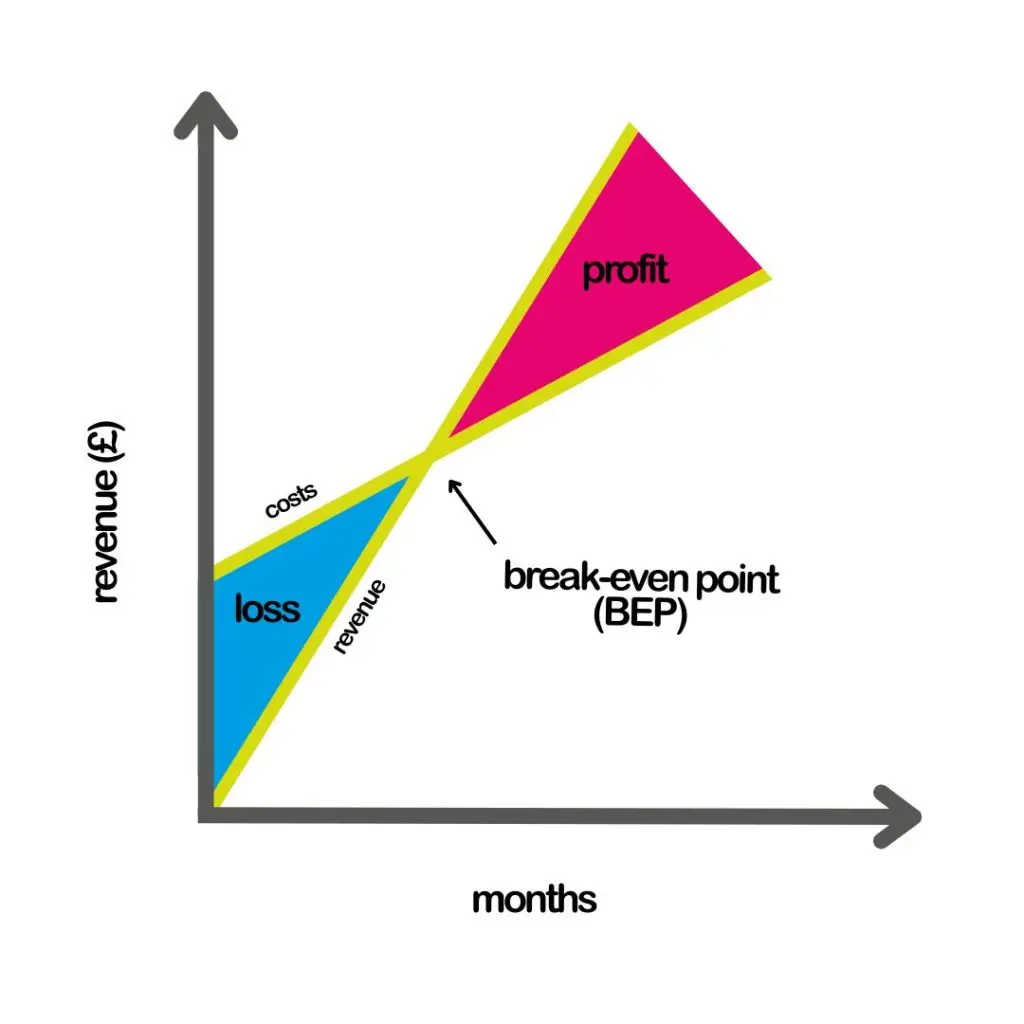
We often refer to the “Triangle of Loss to Breakeven” as a way to visualise a franchise’s journey (See image). At the base is the initial outlay, (your total set-up costs). As time progresses, your trading losses (which are normal in the early stages) reduce as income grows, narrowing the gap. The peak of the triangle marks your break-even point (where income begins to consistently cover costs.)
Understanding this journey helps keep expectations realistic and reinforces the importance of adequate working capital to traverse the path safely.
Final thought: Build on strong foundations
Your franchise’s success doesn’t just hinge on how good the brand is or how enthusiastic you are – it hinges on preparation. Working capital may not be as exciting to talk about as branding or marketing, but it’s the foundation that keeps everything running. By taking the time to properly calculate your full start-up costs, including VAT and less obvious fees, and by ensuring your working capital provision is realistic and robust, you’re not just starting a business… you’re building one to last.