New year, new ideas, but not innovation for its own sake.
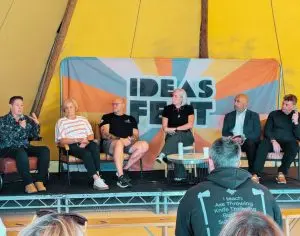
That thought has stayed with me since a recent trip to New Orleans for Indeed’s Future Works event, which focused heavily on how AI is changing recruitment. I was listening to organisational psychologist and bestselling author Adam Grant talk about the benefits and risks of using AI in this space. He shared a story about a business that had moved its recruitment process almost entirely to AI. The system identified ten new hires who looked ideal on paper in terms of experience and cultural fit. The problem was that, while all ten were strong individuals, none of them was the one true superstar the business really needed. Adam explained that AI, at this stage, struggles to find that kind of standout person because they often sit outside the usual parameters of what a “good” candidate looks like, and so they are never brought forward.
I remember leaving that session thinking how closely that mirrors what I see in franchising. Some of the most successful franchise owners I have met did not come from the typical background for their sector. They brought values, resilience and imagination that a model trained on historic data might miss. The same is true for people in our Franchise Support Centre. People often arrive through unusual routes and go on to do brilliant things. Human potential does not always behave in a neat, predictable way, which is exactly why I am wary of any tools that pretend it does.
When I look beyond that one example, the wider picture around AI tells a similar story. Recent 2025 surveys* suggest that almost two-thirds of organisations are now using generative AI in some form, yet only a small proportion feel they have embedded it well enough to deliver long term value. Many leaders talk about early productivity gains, but also a growing need for clearer governance and human oversight. At the same time, FRANdata** reports that 63% of franchisors plan to increase their use of technology this year to manage labour shortages and rising costs, a sign of both opportunity and pressure.
So the question is not whether AI will reshape franchising. It is how each brand chooses to apply it.
From where I sit, leading a national home care franchise network, this is where I see the sharpest dividing line appearing. On one side are systems that use AI mainly to cut costs and reduce headcount. On the other are systems that use AI to give people more time and better information, so they can focus on the work that really matters. I believe the gap between those two approaches will only grow in the years ahead.
Franchising, at its heart, is a relationship model supported by a system. You can have very detailed processes on paper, but consistency only comes to life when people trust each other, communicate well, and share a clear purpose. That is especially true in home care. Our work is about human connection, quality, and responsibility. It is also why, even after twenty years in the market, we are not standing still. Our 2025 recognition as Franchisor of the Year from the British Franchise Association is a testament to that focus, not a reason to slow down.
AI can play a helpful role in care, but only with the right intent. In my view, technology has to make life better for customers and the teams that support them. If it does not, we leave it alone. That is why, unlike the business in Adam Grant’s example, I would not want our own hiring to move to a purely AI-led model.
I do, however, see a clear place for AI as a support tool. Used effectively, it can monitor information from care visits, rotas, training, audits, and customer feedback, and flag early signs of pressure so office and care managers can act before issues escalate. That means managers can focus on what really matters. They can spend more time in people’s homes and with their teams, rather than being stuck in paperwork. In simple terms, AI only works for us when it gives people more time, not less.
We have built our structure around that belief. We continue to invest heavily in people, culture and support, because quality and consistency are non-negotiable. Technology is there to help with that, not to replace professional judgement or care. A Director of Technology now leads our work on systems, governance and testing. His role is to make sure tools support the network rather than run it, and that any innovation is tested carefully before it reaches franchise owners and their teams.
For anyone exploring franchises in 2026, I would encourage you to ask franchisors some very direct questions about AI: Where are you already using AI in the network? What decisions still need a human to say yes or no? How do you check AI-driven tools for bias? What information do you share with franchise owners so they can use AI-enhanced insight for their own local decisions, rather than feeling that everything sits in head office?
Because when you buy into a franchise, you are not just joining a brand. You are stepping into its way of working with people, service and innovation.
AI will become more powerful over the next decade. The franchises that succeed will be the ones that stay anchored in people, purpose, and responsible growth.
* https://www.mckinsey.com/capabilities/quantumblack/our-insights/the-state-of-ai-2024
** https://frandata.com/franchisors_are_doubling_down_on_technology/