Starting a business from scratch can be exciting, but it can also be lonely. You might have a great idea and plenty of ambition, yet still find yourself wrestling with everything from marketing and finance to systems, suppliers and sales.
But what if you could run your own business without having to work everything out alone?
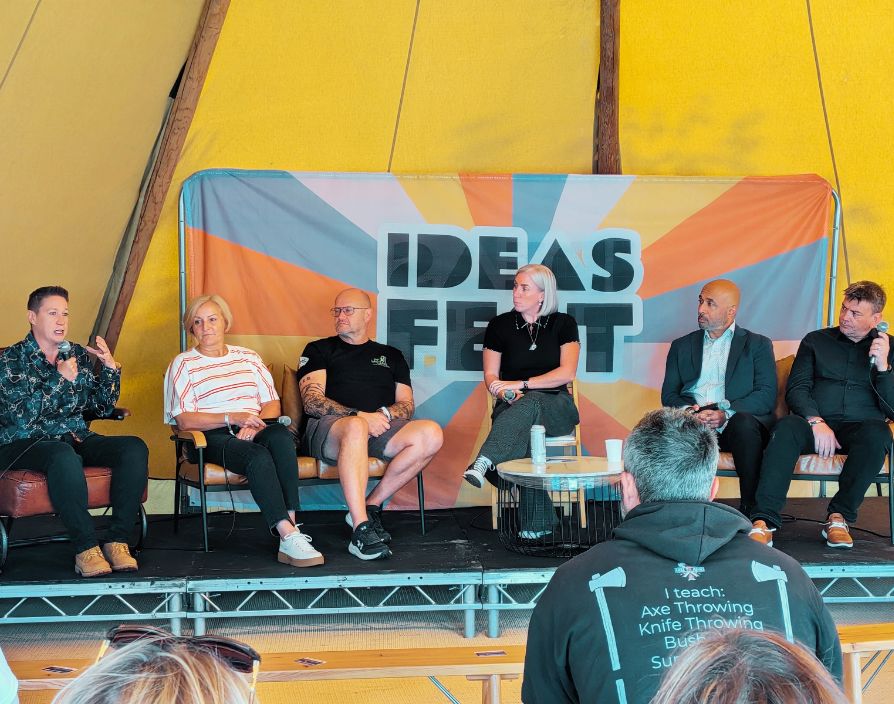
That was the question at the heart of an Elite Franchise Live panel at Ideas Fest 2026, hosted by Jodie Marsh, International Commercial Director for UK and Canada at Elite Franchise.
She was joined by Pip Wilkins from the British Franchise Association, Rachel Brooks, Managing Director of Swim Time UK, Liam Hobbs, Owner and Director of More Than Loft Ladders, Lateef Iqbal, Franchise Partner at easyStorage South East London and Kent, and Matt Clark, Commercial Director for Stagecoach at Trafalgar Education.
Between them, the panellists brought decades of experience from both sides of the franchise relationship. Some had spent their careers supporting franchise networks, while others had experienced the journey first as franchisees and later as franchisors.
Together, they tackled the questions many aspiring business owners have about franchising. What does it actually involve? How much does it cost? How do you find the right opportunity? And, perhaps most importantly, how do you avoid making the wrong decision?
Running a business, but not on your own
Franchising is sometimes misunderstood as simply paying to use a familiar name. In reality, there is much more to it.
Pip Wilkins explained that business format franchising is a relationship between a franchisor, which owns the brand and business system, and a franchisee, who runs a version of that business in a local area.
The franchisee gets access to a recognised brand, an established way of working, training and continued support. In return, they agree to follow the model and uphold the standards of the wider network.
“It is not a business in a box where you buy it, they train you, and then you are on your own,” said Wilkins.
That continued support is what separates a genuine franchise from a simple licence. Franchisees should be able to call on the experience of the central team, as well as the knowledge of other franchisees who understand the realities of running the business.
For Liam Hobbs, that sense of reassurance was one of the main reasons he chose franchising.
Hobbs joined More Than Loft Ladders as a franchisee in 2013 before becoming its franchisor in 2022. At the time, he knew that he wanted to run something of his own, but he did not want to face the journey without support.
“Franchising felt safe because they had been there, they had done it and you are not on your own,” he said.
The model gave him access to the practical foundations of the business, including training, product knowledge, marketing materials and systems. Instead of figuring out every detail through trial and error, he could learn from a model that had already been tested.
A structure that helps you move faster
Lateef Iqbal was not always convinced by franchising. In fact, he was openly sceptical.
Having run independent businesses, he was used to doing things his own way. His view changed when he saw how much busier a franchisee competitor was and began to understand what the model could make possible.
He went on to spend 25 years with Specsavers before becoming a franchise partner with easyStorage.
Iqbal compared franchising to putting tracks beneath a train. You still need to drive it and decide how far you want to go, but you have a clearer route ahead of you.
For him, one of the biggest benefits was being able to focus on the areas where he could add the most value.
“Why am I bothering with the processes, the manufacturing, the suppliers and the buyers?” he asked. “As a franchisee, I am there to sell.”
That does not mean franchisees have an easy ride. They are still responsible for building their local operation, winning customers and managing the business. The difference is that they are working with established systems rather than starting with a blank sheet of paper.
Rachel Brooks added that joining a larger network can bring valuable buying power. A single independent operator may have little room to negotiate with major suppliers or technology providers. A franchise network can often secure better terms on behalf of everyone within it.
The cost question
One of the most common assumptions about franchising is that it is only available to people with considerable wealth.
The panel was quick to challenge that idea.
Franchise opportunities span a huge range of sectors and investment levels. While some well-known brands require substantial capital, there are also smaller service and lifestyle businesses with far lower entry costs.
The right figure depends on the business, the territory and what is included. Prospective franchisees therefore need to look beyond the initial fee and understand the full financial commitment.
This means asking what the fee covers, what equipment will be needed, how much working capital is required and what continued charges will apply. It also means being realistic about personal finances and how much income the business will need to produce.
Brooks pointed to an important difference between franchising and going it alone.
“If you go it alone, your expenditure is unknown,” she said. “If you go through a franchise route, it is ring-fenced. You know what your commitment is.”
Funding may also be available. Several panellists noted that banks are familiar with established franchise models and may be more comfortable assessing them because there is already evidence about how the business works.
However, access to finance should never replace careful research. If lenders are consistently unwilling to support a particular opportunity, that may be a reason to investigate further.
Start with the life you want
With so many opportunities available, deciding where to begin can feel overwhelming.
The panel’s advice was to start with yourself.
Think about what you enjoy, where your skills lie and what you want your working life to look like. Do you want to be closely involved in delivering the service, or would you prefer to build a team and eventually step back from daily operations? Are you looking for a full-time business or something that offers greater flexibility?
Passion matters because franchising still demands hard work. A strong brand and proven model can give you a head start, but they cannot create enthusiasm or resilience on your behalf.
“Make sure it is not all about the money,” said Iqbal. “You need the passion and drive to make it work.”
That does not mean you must already be an expert in the industry. Many franchisees enter new sectors and learn through training. What matters is having a genuine interest in the work and the motivation to keep going when things become difficult.
Clark suggested identifying a field that excites you, then comparing several franchises within it. The aim is not simply to find a business that looks profitable, but to find one that suits the life you want to build.
Take your time and ask awkward questions
If there was one message repeated throughout the session, it was the importance of doing your homework.
A responsible franchisor should not rush you. The process will often begin with an information pack or disclosure document, followed by a discovery session and more detailed conversations with the central team.
These stages should give you a clearer view of the brand, its history, its finances, the support available and what daily life as a franchisee actually involves.
Brooks said the process should feel like a genuine assessment on both sides.
“It is not a sales process,” she said. “If you go to a franchise brand and you feel you are being sold to, walk away.”
The franchisor needs to decide whether you will be a good fit for the network, but you should be judging the franchisor just as carefully. Shared values matter because this is likely to be a relationship that lasts for years.
Wilkins compared it to dating. You would not normally go on one date and immediately get married. In the same way, nobody should commit to a franchise after one impressive presentation.
Speaking to existing franchisees is one of the best ways to understand what you may be joining. Ask what has gone well, what has been difficult and how the central team responds when problems arise.
Iqbal took this approach when investigating easyStorage. Rather than asking for another sales pitch, he asked someone within the business to tell him everything that had gone wrong.
The honest answer helped to convince him.
“I quite liked the honesty,” he said. “They were saying, ‘Look, it is not for everyone. This is what is involved.’”
What happens when things go wrong?
Most people naturally ask about revenue, growth and the path to profitability. Matt Clark suggested adding another question to the list: what happens when it goes wrong?
Every business encounters challenges. The real test of a franchise is not how it behaves when everything is running smoothly, but how it supports franchisees when it is not.
Speaking to people across the network can reveal whether the central team is available, honest and capable when problems arise. It can also help you understand whether challenges are isolated or part of a wider pattern.
Clark described franchising as being in business for yourself, but not by yourself. The central team may provide access to marketing, finance, human resources, compliance and other expertise that would be difficult for an independent business owner to build alone.
That support can be extremely valuable, but prospective franchisees should never simply assume it will be there. They should ask what support looks like in practice, how often it is provided and who will be responsible for delivering it.
Know when to walk away
Not every franchise is a good opportunity, and not every good franchise will be right for every person.
The panel highlighted several warning signs. These included pressure to sign quickly, exaggerated financial forecasts, a refusal to let applicants speak to existing franchisees and sudden changes to the information being presented.
A hard sell should be treated with particular caution. If someone claims the price will rise unless you sign immediately, that is not the foundation for a healthy business relationship.
Prospective franchisees should also be wary if the opportunity focuses entirely on money while saying little about the work, culture, expectations or risks involved.
The franchise agreement deserves particular attention. This is a detailed legal document that sets out the rights and responsibilities of both parties, including what happens if standards are not met, how the business can be sold and how the relationship may end.
Wilkins urged prospective franchisees to have the agreement reviewed by a solicitor with specific franchise experience. The terms may be standard across the network, but that does not make it any less important to understand what they mean.
Research can save you from an expensive mistake, but it also has a more positive purpose. It can give you the confidence to say yes when the right opportunity comes along.
A different route into business ownership
Franchising is not a magic formula, and it is certainly not a licence to print money. Franchisees still need to put in the time, make decisions, lead people and win customers.
What franchising can offer is a tested route, an established identity and a group of people who have already travelled some of the road ahead.
For those who dream of running a business but feel uneasy about doing everything alone, that combination can be powerful.
The advice from the Ideas Fest panel was refreshingly practical…
- Find something you care about
- Compare several opportunities
- Meet the people behind the business
- Speak to franchisees
- Question the numbers
- Read the agreement
- Ask what happens when times are tough
Above all, do not allow anyone to rush you!
Business ownership may be closer than you think. The key is finding not just a franchise that works, but one that works for you.
Stay up to date with Elite Franchise Live
Want to hear when the next Elite Franchise Live event is announced? Subscribe to Elite Franchise for the latest event updates, expert insights and practical advice for aspiring and established franchisees.