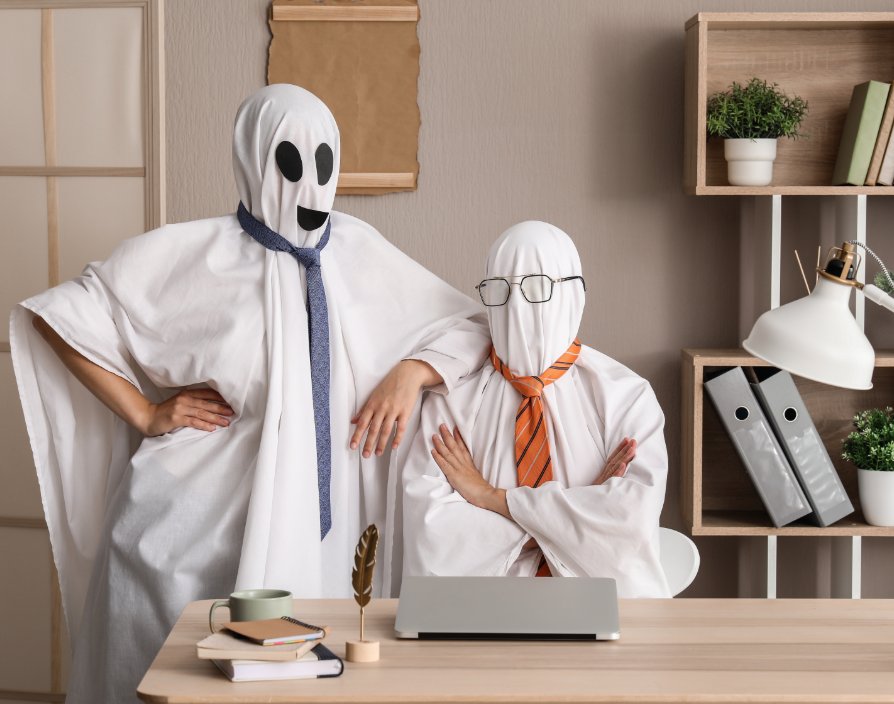
While many people choose to visit the cinema to catch a horror film around Halloween, there may be some creepy characters haunting your workplace all the year round.
The skinwalker
A terrifying piece of Navajo folklore, the skinwalker can shapeshift assuming differing human and animal forms. Created by witchcraft they are bad news for anyone in their sights.
The skinwalker may show up in your business as a remote worker. But there is more to this than meets the eye; for they are actually working remotely full time for other employers too, appearing in different roles simultaneously and pocketing multiple salaries.
They know every trick in the book, slacking as often as they can, feigning illness when the demands of one job cannot be met, even applying makeup to appear unwell.
Your defence? Ensure you have explicit clauses in your contract preventing them from other full-time work while employed by you; and operate strong line management, like regular 121s and appropriate levels of supervision.
The extra terrestrial
The alien has travelled from afar, and walks (or works) amongst us. They may try to get a job when they are not permitted and could be adept at mimicry and disguise.
Right to work checks are an absolute must when taking on new hires. Thorough checking of paper documents like a passport (and keeping proper records) will normally be sufficient for British and Irish citizens. But for most other candidates, a Home Office electronic check will be required.
Penalties for employing people who do not have a right to work are severe. Fines start at £45,000 per worker for a first offence and rise to £60,000. If you can prove you did the checks properly, you may be able to form a statutory defence should ET have slipped through.
The scavenger
In post-apocalyptic films, resources are thin on the ground. From squirrel-on-a-stick to mole-rat chunks the survivors will get creative to take on some calories. Anything goes!
The same should not be true for your workplace, but do you have “the scavenger” lurking in your business? Snaffling more than their fair share of the communal cake, pinching the hot water from the kettle that someone else boiled, even stealing a colleague’s lunch!
Do not let them take the biscuit! Such behaviour left unchecked will damage morale, encourage passive aggressive responses or even outright conflict. Proactive management and a positive company culture will keep those scavengers at bay.
Patient zero
While the Covid pandemic and its lockdowns are thankfully a few years in the past, you may remember that “superspreader” was a buzzword back then. In pandemic horror films there is always a patient zero from whom the infection spreads.
In your business, it is unlikely that anyone will come in after just being bitten by a monkey or having dropped a test-tube in a secret lab.
However, presenteeism is a common problem. This is when there is a culture of attending work, even when they are really unwell and should stay at home for a couple of days. Not only are they unlikely to be productive, working slowly and more prone to mistakes; worse still, they are likely to spread their illness to colleagues amplifying the effect on your business.
There is a fine line to walk between managing absenteeism and presenteeism. But giving staff the confidence to take a day off when they are genuinely unwell will be best for everyone in the long run.
The mummy
We are talking mummies of the ancient Egyptian variety here. They have been around for millennia and are a malevolent presence for all who encounter them.
While in the movies they are easily spotted as being wrapped in tattered cloth and with glowing eyes, in your business they might be noticed as the person who has been there too long, has grown cynical and is generally a drag on morale. Maybe they disregard instructions thinking they know better, or are resistant to changes that need to be made.
Tread carefully as age is a protected characteristic in equality law, although your “mummy” need not be old – they have just been around longer than most. Addressing such behaviour through robust line management is essential.
If you think their mummified ways can be overcome through cooperation, how about exploring reverse mentoring – where a more junior member of staff mentors a senior?
Horror is not just for Halloween. Make sure you keep your business safe throughout the year, by staying on top of your people management.
Key takeaways
- The skinwalker represents the risk of undisclosed moonlighting – remote workers covertly holding a second full-time job. Explicit contract clauses restricting other work during employment are the main defence against this.
- The extra-terrestrial highlights the legal necessity of right-to-work checks before any hire. Penalties for employing someone without the right to work start at £45,000 per worker for a first breach, rising sharply for repeat offences.
- The scavenger symbolises workplace pilfering and freeloading – behaviour that, left unchecked, damages morale and encourages passive aggression among colleagues who feel the burden is not shared fairly.
- Patient zero illustrates presenteeism: a culture of attending work while unwell. Employers need to walk a careful line between managing absenteeism and giving staff genuine confidence to take sick leave when needed.
- The mummy represents outdated working practices among longer-serving staff. Age is a protected characteristic under equality law, so addressing this requires sensitivity – reverse mentoring is one practical way to bridge the gap without risking discrimination claims.