A successful business is one thing. Turning it into a franchise that somebody else can operate, grow and make profitable is something else entirely.
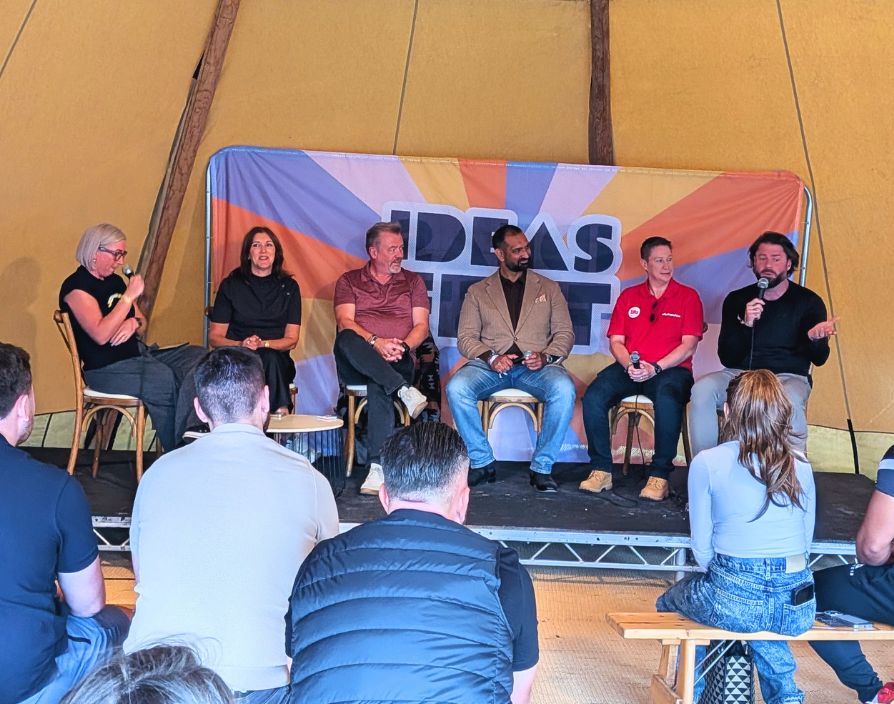
That was the focus of an Elite Franchise Live panel at Ideas Fest 2026, hosted by Jodie Marsh, International Commercial Director for UK and Canada at Elite Franchise.
Marsh was joined by Angie Coates, Founder and CEO of Monkey Music; Alan Wilkinson, Senior Partner at the Franchising Centre; Amrit Dhaliwal, Founder and CEO of Walfinch; Pip Wilkins, CEO of the British Franchise Association; and Ryan Armitage, a Qualified Franchise Professional.
Between them, the panellists had built franchise networks, advised hundreds of brands, supported franchisees and, crucially, made plenty of mistakes along the way. Their discussion offered an honest look at what it takes to turn an established business into a franchise, from documenting every process to accepting that the founder can no longer control everything.
The message was clear. Franchising can be a powerful route to growth, but it is not simply a matter of copying a successful business and selling it to somebody else.
Success must come before scale
It is easy to understand why franchising appeals to ambitious business owners. If one location works, why not help other people open more of them?
But before thinking about franchise agreements, recruitment campaigns or national expansion, founders need to answer a more basic question. Does the original business genuinely work?
Wilkins warned that franchising an unproven model simply spreads its weaknesses.
“If you are not successful, if you franchise, you are just going to franchise things that do not work,” she said.
A business must be commercially viable, repeatable and capable of producing a worthwhile return for both the franchisor and its future franchisees. Claims about potential earnings must be supported by evidence rather than optimism.
Wilkinson suggested that founders consider five important areas. The business should have a successful track record. It should be possible for somebody with the right skills to learn how to run it. It should be capable of working in different locations. It must generate enough profit to support both parties. Finally, the relationship must be built around trust and support.
Many businesses will not meet every condition when they begin exploring franchising. That does not necessarily mean they should abandon the idea. It means they may have work to do before taking it to market.
A good idea, however exciting, is not enough. “Go and pilot it, go and trial it and prove that it works,” said Wilkinson.
Running a franchise network is a different business
One of the biggest surprises for founders is how dramatically their own role changes.
Dhaliwal experienced this after building and selling a successful home care business before launching Walfinch. He had previously been an independent owner and a franchisee, but becoming a franchisor presented an entirely different set of challenges.
“I thought, I’d run a home care business. I am able to make money out of a single home care business. How hard could it be to teach everyone else?’” he recalled.
The reality was more complicated.
A franchisor needs different people, systems and marketing. Instead of concentrating mainly on customers and daily operations, the founder must recruit, train, coach and support a network of business owners.
That requires a significant change in perspective. A great operator may know instinctively how to sell, solve a customer problem or manage a difficult situation. A great franchisor must be able to explain that knowledge clearly enough for somebody else to apply it.
Wilkins put the distinction plainly. A founder who once spent the day running a shop, delivering a service or serving customers will increasingly spend that time managing relationships.
“You are managing, recruiting, supporting and motivating franchisees,” she said. “That will become your job.”
For founders who love the practical work but have little appetite for coaching or managing others, franchising may not be the right route.
Write down what is in your head
Most successful founders have habits and techniques they barely notice. They know what to say when the telephone rings, how to welcome a customer and when to follow up a sales enquiry. Because those actions feel natural, they may never have been formally recorded.
A franchise cannot rely on instinct alone.
Dhaliwal described how his approach to winning home care clients involved a series of small, deliberate actions. He answered calls quickly, arranged prompt meetings and spent the opening minutes of a home visit looking at photographs and starting a natural conversation.
It worked for him, but it could only become part of a franchise model once every step had been examined, explained and taught.
“I really needed to think about all the things that just happened by accident with me and break that down,” he said.
This is where the operations manual becomes essential. It should explain how the business works across marketing, sales, customer service, staffing, finance and daily operations. It must contain enough detail for another person to follow the system correctly.
Wilkins used a simple example. If you are teaching somebody to iron a shirt, you cannot begin with the ironing. You must first tell them to plug in the iron.
Founders who hope to franchise in the future can begin this work now. Recording processes, refining training and identifying where knowledge sits with one individual will strengthen the existing business even if franchising remains some way off.
Can you hand over your baby?
Turning knowledge into a system is one challenge. Emotionally letting other people use it is another.
For many founders, the business is intensely personal. They created the idea, shaped the culture and protected its reputation. Inviting somebody else to trade under that name can feel like handing over something precious.
Coates knows that responsibility well. She developed Monkey Music while raising her family and expanded the network gradually. That pace gave her time to create strong foundations and earn the trust of her earliest franchisees.
She advised founders not to rush.
“You have to make sure that what you are doing can be replicated in the way you want it, and it is all about the detail,” she said.
Dhaliwal had to accept that franchisees would not perform every task exactly as he did. Actions that felt obvious to him had to be learnt by others, and that could sometimes be frustrating.
He also had to surround himself with people who knew more than he did. Doing so meant giving up the comfort of being the person with every answer.
That shift can provoke something of an identity crisis. Yet if every decision still depends on the founder, the business is not truly ready to scale. Building the right team means making yourself less essential to daily operations, even when that feels uncomfortable.
Choose people, not just investors
A franchise system is only as strong as the people operating within it.
The temptation to accept an enthusiastic candidate can be particularly strong during the early stages, when a franchisor has invested heavily and is eager to prove the model.
The panel warned that poor recruitment decisions can create lasting problems. Armitage explained that his discovery process involves people from across the business. He observes not only how candidates speak to senior leaders, but also how they interact with administrative staff and other team members.
Those small encounters can reveal more than a polished presentation.
For Armitage, the process matters deeply because his business is personal to him. Tezlom takes its name from members of his family who have died, making the choice of who represents it especially important.
Coates said her own early recruitment process was not thorough enough. Over time, she learnt that systems and processes do more than create consistency. They protect the franchisor by helping the business understand who a candidate really is.
“People under stress behave very differently, and it is stressful running your own franchise,” she said.
Franchisors therefore need to look beyond enthusiasm and available capital. They should consider values, communication style, resilience and willingness to follow a proven system.
The relationship should still allow constructive challenge. A franchisee is not an employee and should understand why a decision benefits the business rather than simply being expected to obey.
Dhaliwal said one of his most important lessons was recognising that some talented entrepreneurs were not suited to his franchise.
“You are great. You will build a successful business, but not with Walfinch,” he recalled telling certain candidates.
That ability to say no can protect the brand, the wider network and the candidate from a partnership that was never likely to work.
Do not expect everyone to be like you
Founders often assume that a franchisee who invests in the business will bring the same energy, working habits and determination that they did.
That assumption can lead to unrealistic expectations and financial projections.
Dhaliwal admitted that he initially believed other people would share his intensity. He later realised that a franchisee might take longer to achieve the same results, which meant forecasts and working capital requirements needed to reflect that reality.
Armitage shared the same lesson. His passion for Tezlom is constant, but even people who are excited about business ownership may not have his level of drive.
A franchisor has to build a model that can work for suitable, well trained people, not only for an unusually determined founder.
That does not mean lowering standards. It means creating training, systems and support that turn capable people into strong business owners.
Know what it will really cost
Franchising is sometimes presented as an inexpensive way to expand because franchisees provide the capital for their own operations. While that is part of the attraction, it overlooks the investment required to build and support the network.
Costs can include a feasibility study, specialist consultancy, accountancy advice, an operations manual, training, legal documents, recruitment activity, marketing and additional staff.
The total will vary considerably according to the business and how much work the founder can complete internally. What matters is developing a realistic financial plan before committing.
Wilkinson recommended modelling the economics for both parties.
- What can a typical franchisee expect to earn?
- What will it cost them to operate?
- What management service fee can the franchisor reasonably charge?
- How many franchisees will be needed before the network covers its continued costs?
“The figure that comes out is likely to be more than you think it is going to be,” he cautioned.
Dhaliwal said founders should think beyond the first year and ensure they have enough capital to support a longer journey. He also recommended retaining a profitable original operation where possible, using its income to fund the network rather than depending on the sale of new franchises to keep the lights on.
Franchise fees should cover the genuine cost of finding, training and launching a franchisee. The continued management service fees are where a franchisor should ultimately build sustainable income.
That distinction matters. If the business needs a constant stream of new franchise sales simply to survive, recruitment decisions may be driven by short term cash rather than long term suitability.
Some things can be built gradually
The panel brought different perspectives on how much money a founder needs before beginning.
Armitage argued that entrepreneurs can take practical steps in stages. They can research the market, begin documenting processes, visit franchise exhibitions and seek advice without having every part of the final budget immediately available.
Wilkins agreed that much of the preparation can begin internally. However, she identified one area where founders should not attempt to save money by doing it themselves: the franchise agreement.
A generic template cannot properly account for the brand, operating model and risks of an individual business. The agreement needs to protect the franchisor, the franchisees and the network as the relationship develops.
“This is the document that is going to protect you,” she said. “You need a proper franchise lawyer who will structure an agreement that fits your brand and your business system.”
Founders may be able to write early versions of their processes or build training resources themselves, but these should still be checked by experienced franchise professionals before the opportunity is launched.
Support does not stop after the sale
Franchising is not about collecting an initial fee, handing over a manual and wishing the new owner luck.
It is an ongoing relationship.
Franchisees need training, guidance and access to people who can help them solve problems. The franchisor must continue improving the system while listening to feedback from those using it in different locations.
That feedback will not always be comfortable. Franchisees may discover gaps in the manual or find that a process which worked perfectly in the original business needs further explanation.
Wilkins said strong franchisors need resilience, perseverance and self awareness. They must be prepared to hear that something is not working and take responsibility for improving it.
Dhaliwal added that ego has no useful place in the relationship. A franchisor must adapt communication to different personalities and remain focused on helping other people build profitable businesses, even when doing so brings short term challenges.
For Coates, collaboration is central. Franchisees need to listen to the franchisor and respect the model, but franchisors must also listen to the people applying it every day.
A community willing to share
One of the more encouraging themes from the discussion was the openness of the franchise community.
Several panellists admitted that they had once been reluctant to approach competitors, assuming those conversations would not be welcome. In practice, they found experienced franchisors surprisingly willing to share lessons and discuss common challenges.
Dhaliwal said he wished he had started those conversations sooner. Competitors within home care later became friends and valued sources of advice.
Wilkins encouraged prospective franchisors to attend exhibitions, speak to established brands and draw on the experience available across the sector.
Although every industry is different, many of the challenges are shared. Recruiting the right people, building trust, improving support and protecting standards are relevant whether the business provides music classes, recruitment services, home care or something entirely different.
Are you ready to become a franchisor?
A successful business may have the potential to become a franchise, but commercial success is only the beginning.
The model needs to be proven, profitable and capable of working beyond its original location. Its systems must be clear enough for somebody else to learn. The founder must be ready to become a coach and leader rather than remain the centre of every decision.
There also needs to be enough money, time and patience to support franchisees properly. Most importantly, the founder must be comfortable accepting responsibility for people who have invested their savings, ambitions and future in the brand.
The panel’s advice was reassuringly practical. Start documenting the business now. Test whether it works without you. Speak to experienced franchisors. Build a realistic financial model. Seek specialist advice and take time choosing the people who will represent your name.
Franchising can help a strong business grow far beyond what one founder could achieve alone. But the real question is not simply whether somebody else could run your business.
It is whether you are ready to help them succeed.
Stay up to date with Elite Franchise Live
Want to hear when the next Elite Franchise Live event is announced? Subscribe to Elite Franchise for the latest event updates, expert insights and practical advice for aspiring and established franchisees.