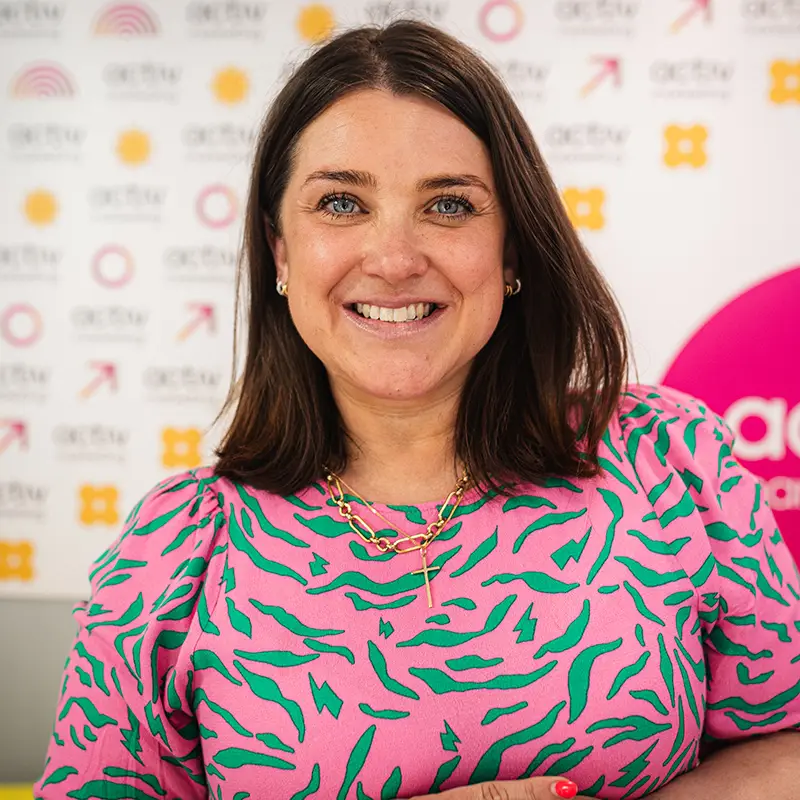
Years ago, before Activ Marketing existed in anything like its current form, I ran my own marketing business off a spreadsheet. Client names down one side, deadlines across the top, three colours of highlighter and no real system underneath any of it. It was mine, and it was the whole business. Holding it all in my head felt like proof of something: that I was capable, indispensable, and on top of it. It was not proof of anything. It was just a risk, dressed up as commitment.
That spreadsheet is long gone, and so is the business that ran on it. What used to be one person holding everything together by instinct is now a franchise network built on our own CRM, Activ Flow, with Kora, our AI support layered in, and partners running their own patch rather than one exhausted founder. Marketing has spent two decades romanticising the solo operator: the freelancer who builds a client base on charm and long hours, wears the burnout as a badge, and calls it independence. That model is starting to look less like freedom and more like exposure.
The data tells a different story
That is not just my story. According to a 2026 survey by the specialist business insurer Markel Direct, 58% of self-employed workers report burnout, and 48% have seriously considered quitting their business altogether over the pressure of being permanently on. Nobody builds a business hoping it will make them want to leave it. But that is what happens when growth outruns structure.
Contrast that with what happens when structure comes first. The British Franchise Association’s 2024 survey found that 99.5% of UK franchises are commercially successful, against Experian’s widely cited figure that half of all new start-ups fail within three years. Franchising contributes over £19 billion to the UK economy, up 12% since 2018, across more than 50,000 franchised units. That gap is not about talent. It is about not having to invent the business model and run it at the same time.
Structure protects the human part of the work
Then there is the technology every marketer is being asked to have an opinion on. Office for National Statistics data shows AI adoption among UK businesses with ten or more employees has nearly tripled, from around 12% in late 2023 to roughly 35% by June this year. But the same research shows only one in ten businesses is using it extensively. Most are bolting AI onto old ways of working rather than rebuilding the workflow around it. That is not structure. That is a patch that can come unstuck very easily.
This is where the industry keeps missing the point. Structure and automation are not there to remove the human from the work. They protect the part of the job only a human can do: reading a client and a strategy well enough to make the right call, not just the fastest one. A piece of software or an AI tool is not worth much if it just makes bad decisions faster. The businesses that last will use systems to buy back time for thinking, not to avoid it.
I see this trade-off constantly in our own network, where the temptation is to standardise until there is no room left for local judgement. This is not our approach nor should it be. The same systems and automation go into every partner’s territory, then we trust the person running it to know their own market, their own clients, their own community, better than head office ever could. Structure is not there to make every partner identical. It is there so the humans in the business can spend their energy on the judgement calls that actually need a human, instead of each reinventing the framework time and time again.
Building something strong enough to hold
Nobody builds a career in marketing because they love admin. Most of us are drawn to the ideas, the client relationships, the moment a campaign actually lands. Structure is not the opposite of that instinct. It is what protects it long enough to matter, and it is the difference between a business that scales and one that simply gets louder.
I do not miss the spreadsheet. I have kept the instinct that built it. I just eventually built something underneath it strong enough to hold not only my own weight, but everyone else who has chosen to build on it since.