I consider myself really fortunate that my introduction to the principles of performance coaching was attending a couple of “train the trainer” sessions with the late Sir John Whitmore. Not all the concepts we explored on those workshops were “easy”, but there were some real light-bulb moments for me. Those sessions are the reason I am still doing what I am doing today and underpin the way I live life.
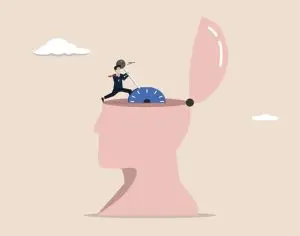
Performance coaching, as defined by Sir John, is a process that focuses on unlocking the potential within individuals to improve their performance and achieve their goals; things which are as essential for an SME owner in today’s fast-paced business environment as they were back when I did my training.
Two things really resonated with me on those workshops; the first being that any coaching/development process starts with how we view individuals in the first place and the second being the power of the GROW model, which was one of Sir John’s most widely recognised contributions to performance coaching.
Let me explain:
If we start with how we see individuals, there is a commonly held belief that when we are born we are a bit like empty vessels and through life and learning we are gradually filled up with knowledge; presumably to the point where we are full and know everything!
Sir John’s view, which is outlined in his book Coaching for Performance, was that people are more like acorns than empty vessels in that when we are born we have inside us all the oak-tree-ness we need in order to grow into our version of a mighty oak – all we need is the right amount of light, warmth and nurturing and we will grow.
That principle of providing people with the right environment for them to develop, as opposed to giving them knowledge to fill them up, is what underpinned the four stage GROW model, with the stages being Goal, Reality, Options and Will.
If applied to the SME environment, the first stage involves setting clear goals that are aligned with both the individual’s and the organisation’s vision. Performance coaching in this context encourages employees to define what success looks like for them and how their personal objectives contribute to the broader goals of the organization.
Once goals have been set, the next step is to assess the current reality. This stage involves understanding where the employee is starting from—what challenges they are facing, what resources they have at their disposal, and what skills they may need to develop. For SMEs, this stage is crucial as it helps identify the gaps between the employee’s current performance and their goals.
The third stage of the GROW model, exploring options, encourages the employee to brainstorm potential solutions and strategies for achieving their goals. This stage is important in an SME environment, where resources may be limited and creativity and flexibility are key to overcoming challenges. Coaching sessions should foster an open dialogue about possible actions, allowing employees to feel empowered to think outside the box.
The final stage of the GROW model is about making a commitment to action. It’s not enough to just explore options; employees must decide on the concrete steps they will take to achieve their goals. In this phase, performance coaching in SMEs focuses on building accountability, ensuring that the employee is committed to the actions they have identified and will follow through with them.
That’s the theory, and that’s one application in a work environment. I use the principles of the model every day in business but my real belief in its power stems from when, at Sir John suggested, I started to use it as a life tool and it became a key component of my “parenting kit-bag”.
During a recent discussion with his friendship group about parenting, my 30-year old son announced that “Mum never said no to me when I was growing up”. I was a single parent and as what he had said sank in, I couldn’t have been prouder of myself. Did he get all his own way growing up? – absolutely not. Did he do everything he wanted, when he wanted? No way. What he had however clearly registered was that we never had a stand-up argument that stemmed from me saying “NO” because I was using the principles of the GROW model and we were having an “actions and consequences” conversation each time he wanted to do something I wasn’t comfortable. As a result, he never came away from a situation feeling as though he was missing out and I am immensely proud of the well-rounded, talented and successful person he has grown to be.
I can personally attest to the fact that Sir John Whitmore’s principles of performance coaching offer a powerful tool for unlocking the full potential of the people around us, whether that’s in a personal or a business setting.
By implementing the GROW model and focusing on goal-setting, self-reflection, and accountability, we can foster a culture of continuous improvement and personal growth. Just as an acorn contains all the oak tree-ness it needs to grow into a mighty oak, people have all the capabilities required to excel. The power of coaching is in providing the light, warmth and nutrition to allow the acorns around you to develop to their full potential.
I am very proud of the oak trees I have nurtured over the years and would ask you – when you look at the people around you, either at home or at work, do you see empty vessels or acorns and could you do more to help them GROW to achieve their full potential?