Ai is no longer a future concept. It’s here, embedded into everyday business operations, and its impact on employment is accelerating fast. Estimates suggest up to 30% of office-based roles could be displaced by ai in the coming years, particularly across administration, marketing, finance, hr and customer service.
For millions of professionals, this has triggered a quiet but profound rethink:
how safe is my career really? And what comes next if it isn’t?
Increasingly, the answer isn’t “another job”, it’s business ownership. And within that, franchising is emerging as the safest route in.
Franchising: stability in an unstable employment market
When people think about starting a business, risk is usually the first concern. And rightly so – around 50% of independent start-ups fail within their first three years.
Franchising tells a very different story.
According to the British franchise association’s most recent industry survey, 99.5% of franchise businesses in the UK are currently trading successfully. That figure alone reframes franchising not as a gamble, but as a risk-managed pathway into ownership.
The reason is simple:
- The business model is already proven
- Systems, pricing and processes are tested
- Mistakes have been made, and fixed, before you arrive
- Training, support and structure dramatically reduce the chances of failure
For those facing redundancy, burnout, or long-term job insecurity, franchising offers something incredibly rare in today’s economy: control with a safety net.
Why ai is pushing people towards people-centric industries
Ai excels at efficiency, automation and pattern recognition. What it can’t replace is human connection.
As office-based roles come under pressure, we’re already seeing a shift towards people-centric industries; sectors built on trust, empathy, motivation and real-world interaction. These are the roles that don’t disappear when software improves.
Industries like:
- Health and fitness
- Wellbeing and rehabilitation
- Care and support services
- Education and coaching
These sectors don’t just survive disruption, they often benefit from it, as displaced workers seek meaning, autonomy and fulfilment in their next chapter.
Fitness franchising: ai-proof by design
Within people-centric industries, fitness franchising stands out as uniquely future-proof.
Fitness is not transactional. It’s relational.
It depends on:
- Motivation and accountability
- Personal coaching and adaptation
- Community and belonging
- Trust built over time
An app can track steps. Ai can generate a workout.
But neither can replace a coach who knows your limitations, encourages you when motivation dips, or builds a space where people feel safe and supported.
This is why demand for fitness and wellbeing services continues to rise, and why well-run fitness franchises consistently outperform independent gyms.
The safety net within the sector
Fitness franchising combines two powerful safety mechanisms:
1. A recession-resilient, ai-resistant industry
People may delay big purchases, but they rarely stop investing in their health, especially when services are personalised, inclusive and community-driven.
2. The franchise model itself
Franchisees benefit from:
- Proven client acquisition systems
- Established brand trust
- Centralised marketing and operational support
- Ongoing training and peer networks
This dramatically reduces the risks that typically sink independent fitness businesses, such as inconsistent lead flow, poor retention or lack of commercial expertise.
A new wave of inclusive fitness concepts
Another reason fitness franchising is thriving is that the sector itself has evolved.
The fastest-growing models are no longer traditional, intimidating gyms. Instead, they focus on:
- People who don’t feel comfortable in mainstream fitness spaces
- Older clients, beginners, or those with health conditions
- Small group or personalised training
- Community over competition
These models unlock massive, underserved markets and create deeper, longer-lasting member relationships, which translates into lower attrition and more predictable income.
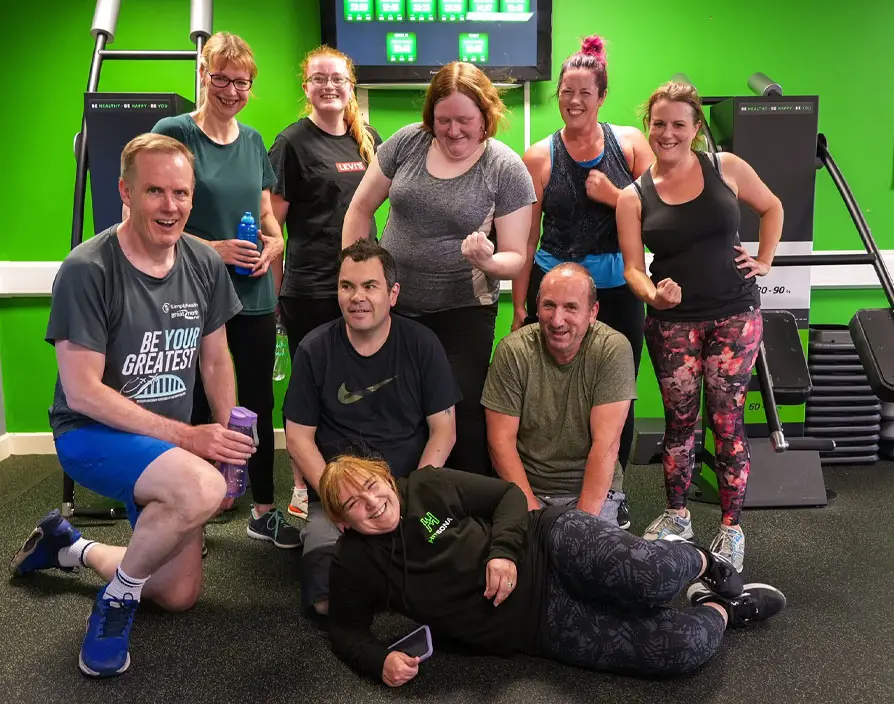
Brands like Hitsona are an example of this shift, demonstrating how fitness franchises can be built around inclusion, human connection and long-term wellbeing rather than short-term trends or tech dependency.
A career change that’s about more than income
For many considering franchising, this isn’t just about financial security, it’s about job satisfaction.
Fitness franchise owners often describe:
- Greater autonomy
- Clearer purpose
- Stronger community ties
- Work that genuinely improves lives
In an era where many white-collar roles feel increasingly fragile and disconnected, that combination is incredibly powerful.
The bottom line
As ai continues to reshape the workforce, the safest careers won’t be the most technical, they’ll be the most human.
People-centric industries will absorb much of the displacement created by automation, and franchising offers a structured, lower-risk route for those seeking a future-proof career change.
Fitness franchising, in particular, sits at the intersection of:
- Ai resistance
- Long-term demand
- Proven business safety
- Personal fulfilment
For those looking ahead, whether out of necessity or foresight, it may represent not just a safer business decision, but a smarter one for the future of work itself.
This article comes courtesy of Hitsona, an international fitness movement dedicated to providing ordinary people with the opportunity to experience the transformative benefits of exercise.