February matters in care, and it matters in business too. It is a month when people notice who shows up. Families feel pressure, loneliness can feel more pronounced, and small acts of kindness can carry real meaning. For franchise owners, it is a brilliant time to lead with a visible community action, choose one local cause, work with the right partner, and make it easy for your team, customers, and local community to get involved.
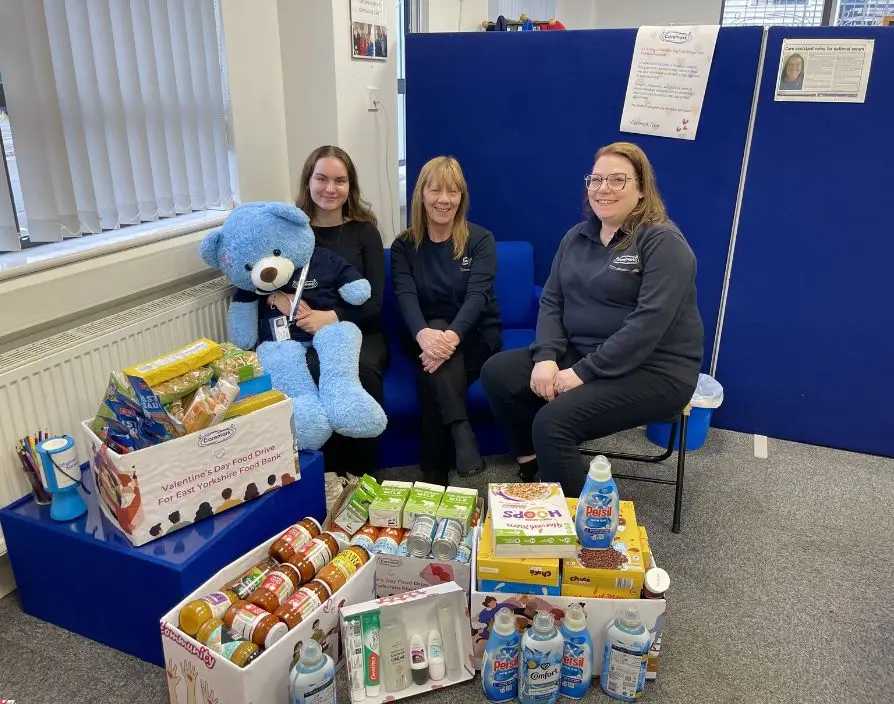
In February last year, we invited staff, customers and members of the public to donate food items in the run-up to Valentine’s Day. The teams at Caremark Caremark Hull, East Riding, York, Selby and North Lincolnshire wanted to support our local food bank during a difficult winter period and use Valentine’s Day as a moment to focus on care, kindness and community, rather than commercial expectation.
The response was immediate and generous. Our collection point filled quickly, staff actively encouraged conversations around the initiative and people from outside the business brought in donations simply because they wanted to be part of something positive. It became a collective effort in the truest sense, shaped by shared values rather than formal structure.
Looking back, what stands out is not just the volume of donations, but how naturally people engaged. There was no sense of obligation, just a quiet willingness to help. From my perspective as a franchise owner, the lesson is: if it looks like promotion, people switch off. If it looks like care, people step forward. Lead with the need, not the brand.
Community engagement is often talked about in terms of outcomes. How much was raised, how many people were reached or what exposure the business gained. Those measures do matter, but for me, they do not explain why an initiative truly works.
The success of last year’s food drive came down to intention. People could see that it was not about “ticking a box”, but about responding to a genuine local need and that understanding shaped how they chose to get involved.
Working with a local food bank was central to that. Alignment matters. Food banks operate at the heart of their communities with deep knowledge of who needs support and how it should be delivered with dignity. Partnering with an organisation that shares your values ensures that support is effective and respectful. It also reinforces trust, both with the organisation itself and with the wider community.
Even if you operate under a national brand, your local relationships are yours to build. I believe local community links is an incredibly important part of business. It is those relationships that build lasting trust and credibility, and over time, they make your business feel like part of the community, not just a service within it.
What we often overlook in business is the less visible impact of giving. We see the donations enter and leave the building, but we do not always see what happens next. A bag of food may ease anxiety for someone worrying about the week ahead. It may reduce isolation by reminding someone that others are thinking of them. It may simply bring a moment of relief. These outcomes are difficult to measure, yet they are central to why initiatives like this matter.
There is also the effect on those giving. Acts of kindness have a way of reinforcing culture. They encourage empathy, reflection and connection, qualities that are easy to talk about but harder to sustain in busy operational environments. Last year’s food drive reminded me that these qualities are not separate from good business practice. They are part of it.
With the benefit of distance, I now see the Valentine’s food drive as more than a one-off campaign. It was an expression of how I want to operate as a franchisee. It showed that when intention is clear, people will step forward. When partnerships are aligned, impact deepens. And when community support is approached with care rather than calculation, the benefits flow in both directions.
I come back to the lesson I mentioned above. As a franchise owner, you have a visible role in your area, and that comes with responsibility. Use moments in the calendar like Valentine’s Day as a reason to start but let the local need lead the decision. Pick something that matters nearby, partner with the right organisation, make it simple for people to contribute, and be clear that the community is the point.
When you support this thoughtfully, you strengthen not only the community around you but the foundations of your business as well.