Do I really want to go back?
For decades, maternity leave has been framed as a pause in a career. Time away before a return to normal service. But for many professionals, particularly in demanding sectors such as marketing, it is becoming something else.
It is a moment of evaluation.
Distance from the commute, the deadlines and the constant negotiation of flexibility allows a different kind of thinking to surface. What used to feel inevitable begins to feel optional.
I speak to women every month who describe a quiet but powerful realisation during this period. They are ambitious. They want stimulating work. They are proud of their expertise. But they are no longer willing to build success in a way that ignores the rest of their lives.
The challenge is that the traditional solutions often fail them.
Part time senior roles remain rare. Responsibilities are frequently compressed rather than reduced. Pay and progression can slow. Many find themselves trying to perform a full time job in fewer hours, carrying guilt both at work and at home.
And even then, control over time is limited.
There is an awareness that a moment will arrive, sooner than anyone expects, when the nursery calls to say a child is ill. Someone must leave a meeting, cancel a presentation or step away from a deadline. For many professionals, that looming choice between being present for work or present for family becomes impossible to ignore.
It is a dilemma countless parents recognise. I remember feeling it myself more than a decade ago, long before I understood there might be other ways to build a career.
Stepping back into employment can feel restrictive. Yet moving into pure self employment brings a different anxiety. Income uncertainty, finding clients, managing operations, delivering work. Freedom can quickly resemble exposure.

So a new question emerges. Is there a middle ground?
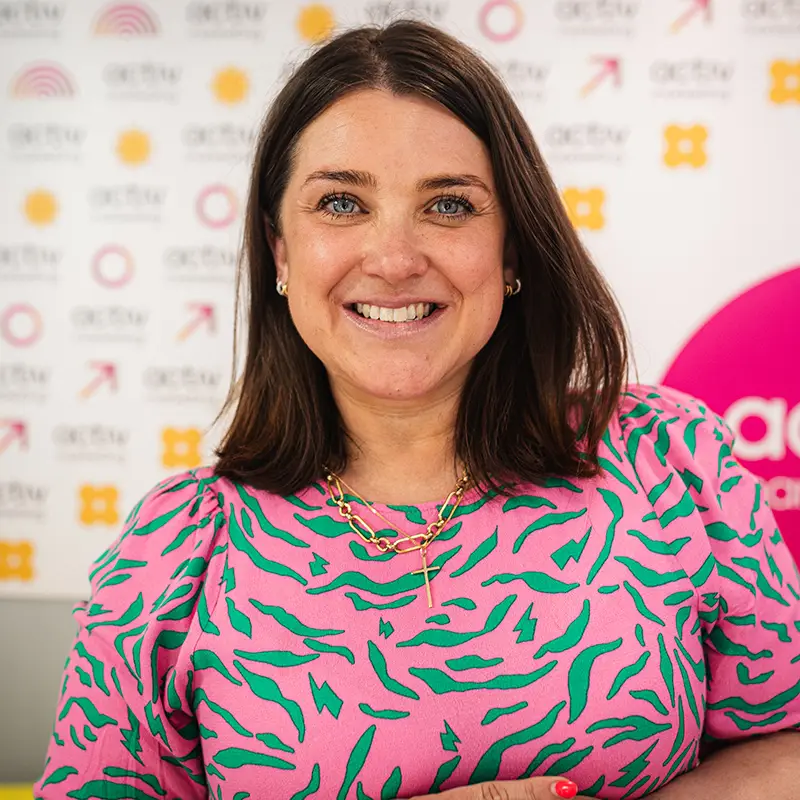
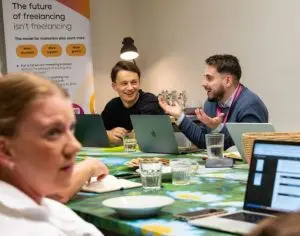
Across the franchise sector, the answer is increasingly yes. In marketing, it is one of the reasons I built activ as a franchise after facing the same crossroads myself: the desire to remain ambitious and independent, but with more support than traditional freelancing could offer.
What makes this shift notable is the calibre of people exploring it. Senior marketers, project leaders, strategists, commercial operators. Professionals who do not want to abandon ambition, but want to express it differently.
They want ownership without isolation.
They want flexibility without fragility.
They want to build something of their own while knowing that systems, expertise and backup exist beyond their individual capacity.
Franchising, at its best, is well placed to respond.
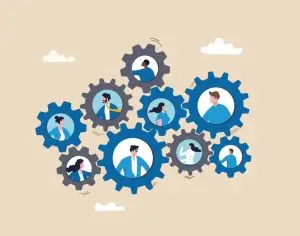
Instead of inventing processes from scratch, new owners step into established frameworks. Instead of carrying every responsibility alone, they operate within communities built to share knowledge and resilience. Energy can be directed toward clients and growth, rather than constant firefighting.
We are seeing this pattern across education, fitness, care, hospitality and professional services. Business formats that once appealed mainly to career changers are now attracting experienced operators redesigning how work fits around life.
Maternity leave is giving people the space to ask better questions.
What if success did not require permanent compromise?
What if responsibility could be shared?
What if ambition and presence at home were not mutually exclusive?
Business ownership will never be effortless. But when it is supported by collective strength, it can become far more sustainable.
What I find inspiring is the confidence with which this generation is approaching the decision.
They are not stepping back from their careers. They are reshaping them.