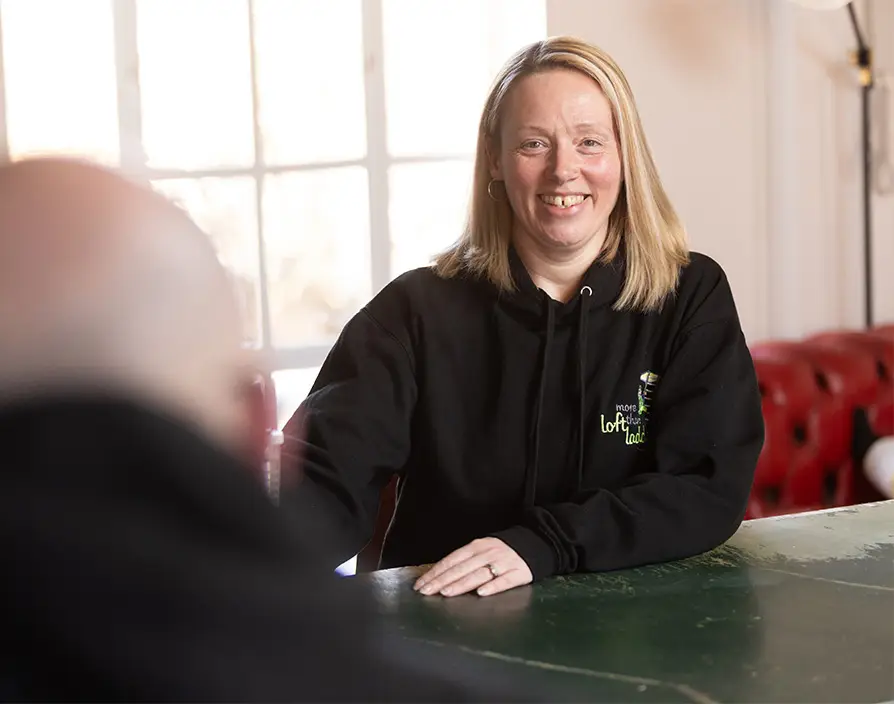
Kelly Hobbs, in charge of onboarding and support, explains how the process works to create confident and successful business owners…
When it comes to becoming part of a new franchise, the difference between early chaos and calm confidence often comes down to one thing – onboarding. At More Than Loft Ladders (MTLL), that responsibility sits squarely with Kelly Hobbs, Franchise Partner Onboarding & Support.
With two decades of customer service experience behind her, Hobbs’ approach is grounded in structure, empathy, and a belief that new franchise partners should feel part of something meaningful from day one.
“For me, onboarding isn’t just ticking forms and handing over manuals – it’s about making sure people feel part of something from day one. Joining a franchise can be overwhelming, so my approach is structured but personal. I take the time to get to know each new partner, their background, their goals, and what support they’ll need to hit the ground running.
“I’m there to guide them through every stage – from training and systems to marketing and their first jobs – but just as importantly, I make sure they never feel like they’re on their own. The first few months set the tone for their whole journey, so I focus on building confidence, clarity and connection. If they know we’re behind them, they’ll grow faster, make better decisions, and enjoy the business.”
Tailor-made onboarding
If onboarding is about structure, Kelly says it’s also about flexibility. Every new partner arrives with different experiences and strengths, and she believes the onboarding process should reflect that.
“No two partners are the same, and I never treat them like they are. Some come from trades, some from corporate, some from completely different careers, so I spend time early on understanding where their strengths are and where they might need more support.
“If someone’s confident with customers but nervous about systems, I’ll focus on CRM and quoting. If they’re practical but unsure on marketing, I’ll bring them into calls with our suppliers or walk them through campaigns in more depth.
“The structure of onboarding is consistent, but how I deliver it isn’t. Some prefer checklists, others prefer hands-on sessions. The goal is the same for everyone – to get them operational and confident – but how we get there is tailored to the person. That’s how we build strong foundations.”
How onboarding unfolds
For anyone new to MTLL, those first few weeks are crucial. Kelly maps out what she calls a “confidence-first” process that takes each partner from signing the agreement to completing their first customer job with assurance rather than anxiety.
“Once the agreement is signed, the first few weeks are all about building confidence and getting them set up properly, not rushing them to ‘just start’.
There’s a five-step process, outlined by Hobbs here.
Introduction and set-up
Go through all the onboarding paperwork, set them up on ‘The Loft’ (MTLL operations portal), CRM, email accounts, and introduce them to key suppliers and support contacts. Book in training dates and marketing launch plan.
Training and foundations
They spend eight days on operational training – quoting, pricing, surveys, CRM, health and safety, and how to deliver the service. “I don’t overload them; I break it into manageable sessions, so it sinks in.” They will spend a further two days with them in their location as they get going.
Marketing and lead generation
Before they’re on the tools, work is done on their marketing launch – social media setup, Google pages, vehicle livery, uniforms. “We want leads ready for them, not the other way round”.
Shadowing and practical experience
“They’ll spend time with our team on real jobs, seeing how jobs are run, how customers are handled, and how the day flows.”
First Jobs – with support
“Once they go live, I stay close. Daily check-ins if needed. Any questions on quotes, customers or systems—I’m there. The first booking is a big moment, and I make sure they’re ready for it, not anxious about it.”
The aim is simple, to ensure that by the time they are fitting their first ladder, they feel equipped, not exposed.
Post launch support
While onboarding may be the first chapter, it’s far from the last. Continued support is built into the MTLL training model.
“Onboarding might finish, but support doesn’t,” explains Hobbs.
“Once a partner is trading, our focus shifts from ‘set-up’ to ‘progress’. I stay in regular contact – not to interfere, but to make sure they’ve always got someone to turn to. Some weeks it’s a quick check-in, other times it’s deeper support around staffing, quoting, or handling customer issues.
“We’ve also built a wider support network – accounting help, marketing, group chats with other franchise partners, training days, and our conferences. I encourage new partners to use the network, not just head office. The most successful franchisees are the ones who stay engaged and ask for help early, not when it’s gone wrong.
“At the end of the day, I want every partner to feel like they’re part of a team, not just paying royalties. We don’t disappear after launch, we grow with them.”
Support that matters
Early-stage franchisees, Hobbs believes, value immediate, practical help that removes any hesitation. It gives them the quick, practical support that is so valued in the initial stages of getting the business established while learning the ropes.
The framework includes:
- Help with quoting and pricing
- System support – CRM, diary management, sending quotes.
- Real-time advice – A quick call when they’re on a job or about to speak to a customer
- Marketing and leads – Knowing the phone will ring gives them confidence. Helping them manage enquiries well is just as important as generating them.
Most of all, they value knowing they can pick up the phone and get an answer. Not an email the next week, but support in the moment.
“When you take that pressure off,” says Hobbs, “they can focus on delivering a great service and settling into the business.”
The MTLL Academy
The onboarding process and the MTLL Academy is designed to lead to natural, continuous improvement beyond that initial launch phase, so that franchisees quickly become comfortable and efficient in running the business.
“Onboarding gets you started – the Academy helps you grow. It gives franchise partners structured training, workshops, and resources so they can keep improving, not just keep going.
We cover things like:
- Advanced sales and quoting – Turning leads into higher-value jobs, handling objections, upselling boarding, lighting, insulation.
- Operational efficiency – Managing teams, job flow, customer communication, time on site.
- Marketing & local brand building – Using social media properly, Google reviews, referral strategies – not just relying on head office.
- Business growth topics – Finance, hiring staff, scaling beyond the van, planning for year two and three, not just surviving year one.”
It’s a mix of online sessions, in-person workshops, peer discussion, and real examples from within the network.
“We don’t do classroom theory, everything is directly tied to running a better business,” adds Hobbs.
The whole point of the Academy is to prevent franchise partners from plateauing but instead to keep sharpening their tools, stay ambitious and build something long-term.
Lessons in customer service
The people-first philosophy that Hobbs brings to MTLL comes directly from her background, which includes two decades in customer service that taught her how to listen, communicate and set standards.
“Customer service teaches you one big thing – most problems don’t come from lack of information, they come from lack of understanding. So, when I support new franchise partners, I don’t just tell them what to do, I make sure they understand why it matters.
“I’m patient but direct. I listen before I advise. Everyone learns differently, and if you push people too fast or speak in jargon, you lose them. Clear communication, follow-up, and checking they’re genuinely confident – that’s how I approach it.”