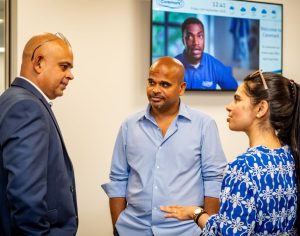
Franchise interviews and discovery days are often misunderstood. For many prospective franchisees, they feel like a hurdle to clear, a performance to perfect, a chance to impress the brand enough to be “chosen”. But this mindset misses the point entirely. These meetings are not auditions; they are a mutual opportunity to get to know one another. Those who understand this tend to stand out quietly, confidently and for all the right reasons.
The strongest candidates arrive having done their homework. They have researched the brand’s visual language, tone and customer base, and dressed in a way that quietly aligns with it. This does not mean imitation, but interpretation. A children’s franchise may call for approachability and warmth; a pet brand, for energy and practicality; a premium service, for polish and restraint. Clothing becomes a shorthand for whether a prospective franchisee has genuinely understood who the brand is for and how it shows up in the world.
Showing up well prepared, asking the right questions and feeling comfortable with what those questions reveal is key. The discovery day should be treated as an investigation, not a validation exercise. Candidates who arrive already convinced the business is “the one” often miss important signals, both positive and negative. Curiosity, not certainty, is what allows good judgement to surface.
The first thing to grasp is that franchise interviews are not traditional job interviews. You are not being hired, you are proposing a long-term commercial relationship. This subtle distinction changes everything. Brands are assessing whether you can follow systems, lead people, represent the brand consistently and cope with the less glamorous parts of business ownership. Confidence matters, but so does self-awareness. Franchisors are less interested in who you aspire to be than in who you actually are on a difficult day.
The candidates who stand out tend to avoid extremes altogether. They dress appropriately, avoiding both overdressing and underdressing. Instead, they signal respect for the brand, for the process and for the scale of the investment they are considering. It is a small detail, but franchise systems are built on attention to small details. In this context, personal style is not self-expression, it is brand stewardship.
Many candidates make the mistake of overplaying passion at the expense of realism. While enthusiasm is welcome, brands assume that anyone willing to invest significant capital has some level of emotional buy-in. What they are really listening for is evidence of commercial thinking. Do you understand the operational model? Have you thought about staffing, local marketing and growth? Are you realistic about the time and energy required? Passion opens the door, but pragmatism keeps it open.
Discovery days are long, sociable and revealing. Wearing something that feels unnatural or performative quickly becomes a distraction both to the wearer and to those assessing them. When clothing fades into the background, presence comes to the fore. Confidence shows up not in bold statements, but in ease with the ability to sit, stand, move and engage without self-consciousness. Franchisors notice when someone is comfortable in their own skin, because it suggests they will be comfortable representing the brand in front of customers, staff and partners.
How you interact with other candidates, staff and existing franchisees is also being quietly observed. Do you listen or dominate? Are you curious or competitive? Are you respectful of the brand’s culture? These moments matter more than rehearsed answers, because they offer a glimpse of how you are likely to behave once the business is yours.
One of the most effective ways to stand out is through intelligent questioning and thoughtful curiosity. Asking about franchisee support during difficult periods, or how the brand handles underperformance, shows that you are not just buying into success stories, but thinking seriously about sustainability. Brands would far rather address these questions upfront than discover later that expectations were misaligned.
Perhaps the most important mindset shift of all is this: you are interviewing the franchise just as much as they are interviewing you. Discovery days are your chance to test whether the values on the website translate into reality. Do existing franchisees speak openly? Are challenges acknowledged or glossed over? Does the support structure feel robust or vague? Walking away from a franchise that does not align with you is not failure; it is good judgement and good business for both parties.
Successful franchisees are not those who try to stand out by being the loudest or most impressive in the room. They are the ones who are grounded, engaged and clear about what they bring to the table. They understand their strengths, recognise their gaps and are realistic about the work involved. That combination is surprisingly rare and therefore highly attractive.
In the end, showing up well at a franchise interview or discovery day is not about performance. It is about presence. Being present enough to listen, to reflect, and to imagine yourself not just at launch, but three years in, managing people, systems and expectations. When you can hold that picture honestly and communicate it clearly, you are far more likely to succeed.