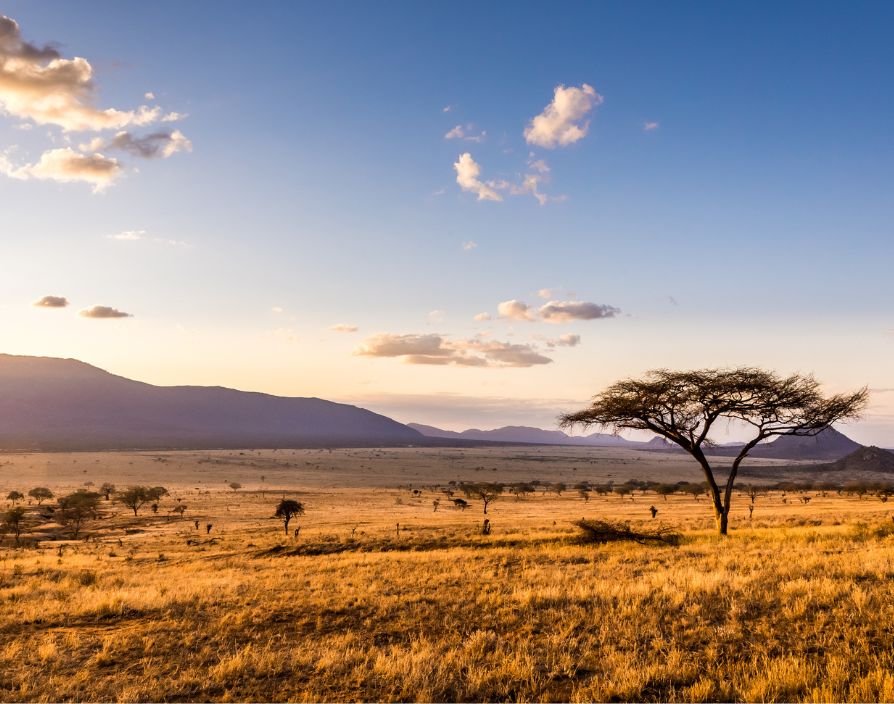
I am very fortunate to spend most of my time in South Africa.
I like to take time to reflect on my surroundings and the value of nature.
For this article though I have given some thought to the strong links between nature and business.
It could be Christmas Eve, or New Year’s Day or in fact any other morning in Africa as I see and feel the mist slowly reaching the tops of the trees revealing extraordinary beauty and tranquillity.
Every day in Africa feels different and yet there is a discernible pattern to each day.
Most early mornings I see the mongoose (maybe fifty of them) scatter from under our stoep as our resident peacock starts his wake-up call
The inyala saunter along to the bushes and trees in my garden for an early breakfast. Generally, there will be a male with his harem and a couple of kids – a real family brekkie!
A couple of hours later a tribe of monkeys will swing through the trees and on the odd occasion the most mischievous will sneak into the house looking for easy food.
Yes, a couple of years ago (in December) one came through the veranda window, pulled aside the shutters, nipped into the kitchen and nicked my last mince pie!!
You have to laugh as I looked out of my office window at this mature monkey walking around mince pie in hand showing off to his mates but not really knowing what to do with it.
I am constantly fascinated by the regularity of nature for no matter the time or day, nature is simply continuous and repeats the events of yesterday and the day before and the day before that.
You can understand why nature is referred to in the feminine (please no objections) for she consistently demonstrates reassurance, resoluteness and robustness and regardless of what is happening in the human world, nature continues unabated.
Moreover, despite the involvement, interference, indifference and at times callousness of humans, nature’s powers of survival are phenomenal.
What can business learn from nature?
Which brings me to the point of this article – what can business learn from nature?
I have spent many an evening sitting on our stoep (veranda) watching hippos leave the huge lake in front of us on their way to the Sabie River.
There is routine, there is process.
The hippos have a tried and trusted system in place.
Mother always goes first followed by the teenagers, then the baby and finally the biggest hippo at the back. I dare not ask if it is a he or she – I suspect I would get a gruff answer!
Routine, process, system.
There are numerous species of birds around the vicinity of our house that come and go, singing and chattering as they attend to their daily business.
Nests are being constructed, food is sourced, young are ‘taught’ and in some cases ‘availability’ is being advertised – mainly by the males – but occasionally by females as well.
Different birds arrive and depart at different times, but the tasks remain similar – feeding, building, teaching. In the evening birds sing, tree frogs grunt and cricket has screech.
Every night we are treated to nature’s very own orchestra – a cacophony of calling, warning or simply communicating – nature’s way of signalling the end of another day and announcing her preparations for tomorrow.
There is no ‘stop and start’ – nature simply flows and sure enough at 4:00am on the dot back come the family of hippos to their home in their lake.
A little after 7:30 in the morning a small herd of elephants cross from their ‘bedrooms’ on one side of a hill to the other to start their day’s work.
You will often find a croc sunbathing on the sandbank minding its own business.
For us of course, this is like living in paradise but for the animals and the birds it is simply nature working at its best – not less and no more.
Structure, routine and relationships
Business and nature – nature and business! What can we learn?
Well, for a start, hippos don’t rush out of the lake – they have structure and routine – minimum effort for maximum reward – something we should note.
Like nature, a well-run business needs structure – people must know their job, how to do it, what is expected from them and how to measure their own success.
For the birds it is building a nest, gathering food, feeding the young.
Good business is more than a collection of activities – different things need doing at different times and like the birds coming and going, a business owner needs to allocate resources to tasks; an owner needs therefore to be ruthlessly organised.
For our businesses it is about identifying customers, verifying the right contact, furnishing said customers with critical information about our business and following up to get an appointment to start a relationship.
Relationships in business; relationships in nature.
In nature relationships are simply everything – hippos and crocs tolerate each other because they have an understanding that working together is far more productive than each attaching the others young, and it is this sense of understanding, this sense of relationships that enable so many species to survive in the wild.
You will often see giraffes in the same vicinity as impala (deer) and zebra because all three work together to protect themselves from predators.
Each has an acute sense – be it sight, hearing or smell and by working together they are more effective at warning each of any dangers.
Similarly, in franchising the franchisor has tools, systems, experience and knowledge and it benefits the franchisee to take advantage of these attributes.
Nothing wasted, nothing haphazard
Nothing is haphazard in nature, and nothing wasted.
Lions don’t gallivant around the African heat for the fun of it.
If they are roaming, then they are hunting.
You don’t see cheetah running at 60 mph to show off to his ‘bruvs’.
If a cheetah is running then he is attacking and he is after food.
And elephants never sleep they simply doze.
Nature doesn’t ‘do’ waste – be it energy, resources or time.
If you want to be successful in business, then you need structure (business plan); you need to recognise the importance of relationships and you need to focus your energy into those areas where you will get maximum return and minimum waste.
Can we learn from nature – you bet we can!