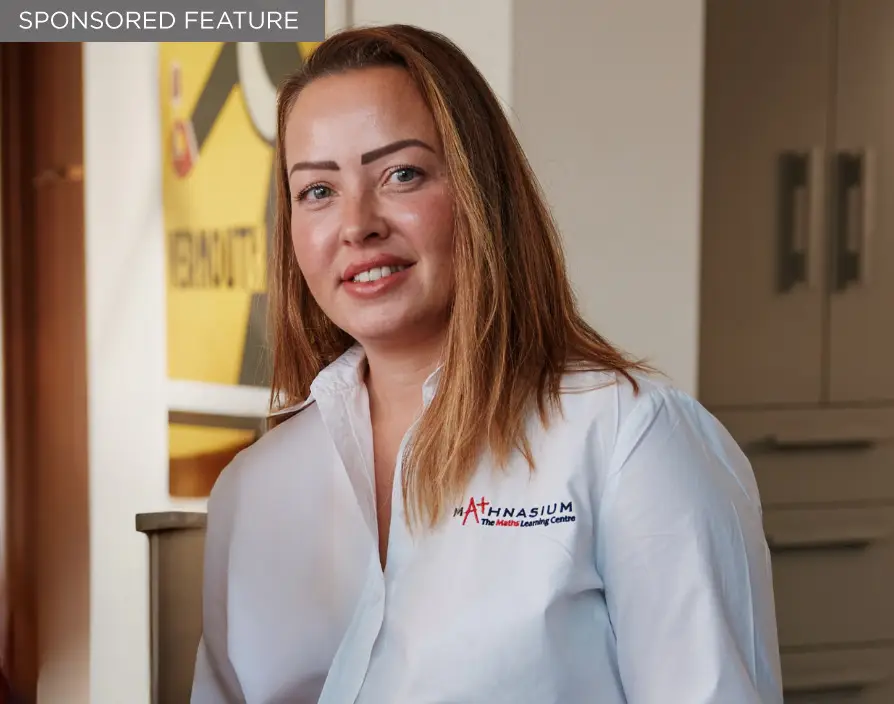
By Emily Price, Chief Operating Officer, Mathnasium
This shift isn’t a post-pandemic bounce. It reflects something more lasting. Learning gaps that have not fully closed, rising expectations around skills and a clear change in parental behaviour are reshaping how education support is used and those changes are unlikely to reverse.
Despite gradual improvement since 2020, attainment has not returned to pre-pandemic levels. Around one in four pupils still leave primary school without meeting the expected standard in maths and at GCSE level maths remains one of the most common barriers to progression. Research continues to point to the equivalent of several months of lost learning in maths for some pupils, with disadvantaged children particularly affected. Ongoing attendance challenges have only added to the disruption, especially at critical points in a child’s learning journey.
What has changed most is how families have responded. Parents are no longer assuming these gaps will resolve themselves over time. Increasingly, they are acting earlier and committing for longer, seeking structured support beyond the classroom. When that shift in behaviour happens at scale, demand settles into something more permanent.
Maths sits at the centre of this change. It is cumulative by nature and early gaps tend to widen rather than disappear. Miss key concepts at the start and everything that follows becomes harder. By the time a child is struggling in secondary school, the issue is rarely just content. More often, it is confidence and once confidence erodes, progress slows quickly and extra worksheets won’t solve the problem.
At the same time, numeracy has become more economically relevant than ever. Analytical thinking and quantitative reasoning now underpin a far broader range of careers than they once did. Parents recognise this instinctively. They are not simply looking for exam preparation or short-term tutoring, but for approaches that help children genuinely understand maths and rebuild confidence over time.
This is where a specialist, maths-only model has proved its strength. At Mathnasium, our approach is built around a simple idea: children make progress when maths is taught for understanding rather than memorisation. Every student begins with an assessment to establish exactly where understanding is secure and where it needs strengthening. Instruction is then personalised and structured, allowing students to progress at the right pace while rebuilding confidence in the subject.
From an operator’s perspective, Mathnasium’s appeal lies in how the educational model and the commercial model reinforce each other. Because students are assessed, placed and progressed on an ongoing basis, families commit for the long term rather than booking one-off sessions. That continuity supports predictable, recurring revenue, but it also makes the business easier to staff and scale, because learning, timetabling and instructor deployment are built around a clear, repeatable framework.
That clarity of approach has allowed Mathnasium to scale to more than 1,200 centres globally, including a growing network across the UK, without compromising consistency or outcomes. For families, the value lies in visible progress and renewed confidence. For franchisees, it lies in a system that has been refined through years of real-world operation and performs reliably across different communities.
Crucially, success does not depend on franchisees being subject-matter experts. The role of the operator is to lead the business, build strong teams, engage locally and execute a proven framework. Scalability comes from systems and standards, not individual expertise, which is why the model appeals to operators with ambitions to grow beyond a single location.
For operators evaluating service-based franchises, longevity matters. Education is not trend-driven; demand for foundational skills, confidence-building and long-term capability does not disappear in tougher economic conditions, if anything, it becomes more pronounced. Mathnasium’s durability reflects how the model has been structured from the outset, with systems and standards designed to support long-term growth without relying on constant reinvention.
The bigger change has nothing to do with schools at all. Families no longer see additional learning support as an occasional intervention. It has become part of how they plan for their children’s future. School remains central, but it is no longer the only solution. Parents are increasingly combining classroom education with targeted support to close gaps, strengthen foundations and build confidence over time.
For franchise operators, this matters. Education franchising is no longer a defensive play. It is a category built on enduring demand and clear fundamentals and one that now sits among the most resilient opportunities in the UK franchise market for operators willing to take a long-term view.
To contact Mathnasium for more information, or to join one of our upcoming Discovery Days in London – Click here.